
GAMING
Loading





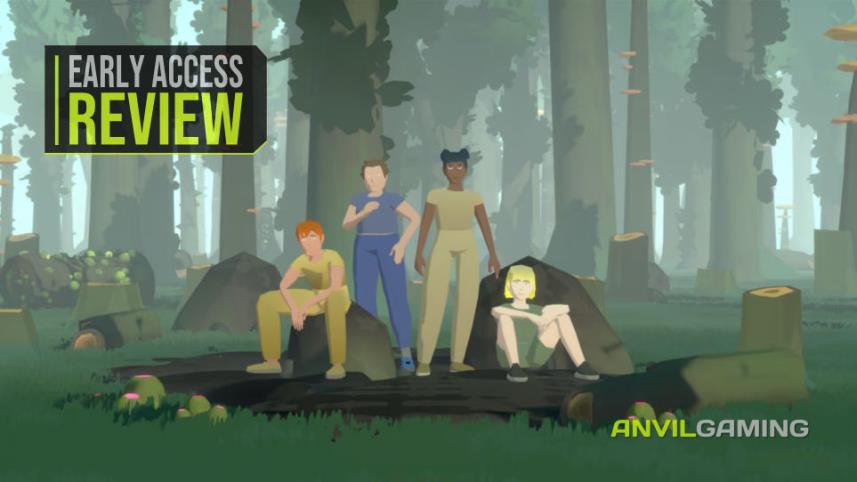
SEED is the sort of game I need to warn you about before I recommend it.
It has given us one of the most convincing player-run worlds I have seen in years. It has also made us discuss storage permissions, medicine supplies, and work schedules with the seriousness of people running a small council. Apparently, this is what happens when an MMO replaces the chosen one with a planning committee.
At the time of writing, SEED starts at €29.99 for PC and Mac through its own launcher. My short answer is this: buy it if you want to join an unfinished society and help make it work. Wait if you want a polished solo game that politely keeps its problems to itself.
Our Verdict

RECOMMENDED FOR PATIENT GROUPS
Reviewed build: 0.3.1. Article date: 23 August 2026. Played by Mr. Pendragon and DancingCoder while founding and running a society of their own on the standalone PC/Mac release.
PROS:
CONS:
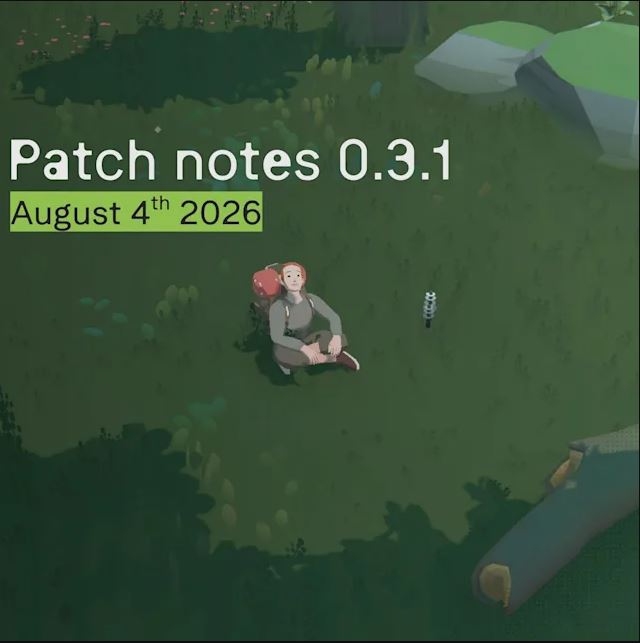
SEED puts you in charge of a Seedling, but not in the usual MMO sense. You are their Cultivator: part guide, part scheduler and, when the plan goes wrong, part exhausted parent wondering why nobody ate the food placed three metres away.
A Seedling has needs, traits, skills, relationships and a finite life. You can give direct orders, but the weekly schedule is what matters. Work, food, sleep, hygiene, social time and recovery all have to fit together. Your Seedling keeps following that plan when you log off, so a bad Tuesday does not wait for you to return on Wednesday.
That distance is what makes the idea work. I am arranging a life that must continue without me hovering over it. The opening hours are still hard work: SEED asks you to understand schedules, permissions, jobs, plots, and containers before you know which mistake is inconvenient and which one will leave somebody hungry.
Most MMOs let hundreds of people play alone in the same place. SEED has the nerve to make them need one another.
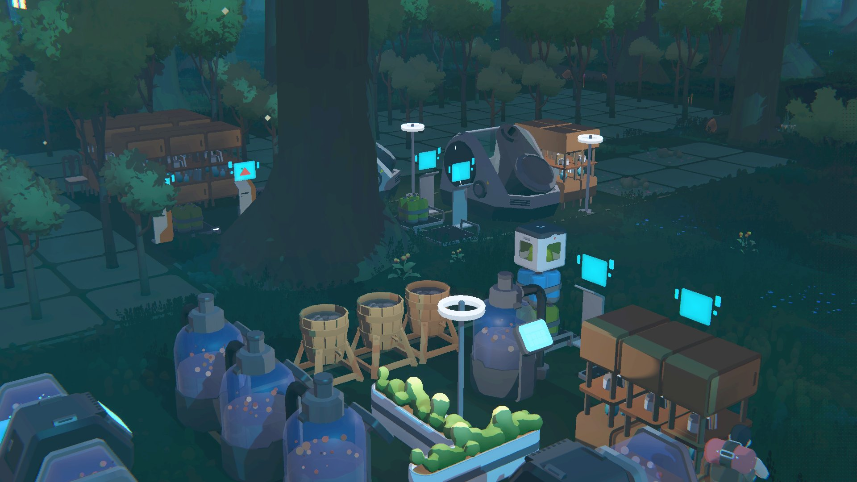
A baker needs crops, tools, workers, storage, and customers. A clinic needs medicine somebody produced and placed where a sick Seedling can reach it. A growing society needs housing, land, and somebody willing to notice that the warehouse is becoming a problem before it becomes everybody's problem.
Inside our own society, DC and I dealt with care, farming, production, businesses, logistics, and expansion. A missing input could affect somebody else's shift. A better storage arrangement could quietly improve several people's day. Those ordinary links made the settlement feel inhabited.
That is SEED's strongest trick: it gives ordinary work consequences. It also makes the quality of your society part of the purchase. Join active, patient people and the game can feel remarkably alive. Join a silent settlement with poor organisation, and you may end up with a very elaborate spreadsheet and some weather.
Time away from the game is not time paused. Logging off does not remove your Seedling from Avesta. They keep working, resting, socialising, and getting themselves into trouble according to the plans you left behind.
Before leaving, we learned to check water, food, medicine, storage, and the next important shift. Then we had to trust the schedule. Returning to find that a plan worked without us was quietly satisfying, and the companion app lets you check needs or adjust schedules away from the computer.
Persistence cuts both ways. If my schedule is poor, the consequence feels earned. If a full container, unclear permission or broken delivery stops the same plan, it feels as though the game has charged me for its own mistake. In an ordinary builder, a confusing menu wastes a minute. In SEED, it can waste a shift.
SEED's economy is not a side activity. Regional resources, production chains, and trade are meant to make societies depend on one another. That is a much more interesting reason to travel than collecting another ten identical hides.
In build 0.3.1, the market was the largest reason I could not recommend SEED without a qualification. Klang's own August market report documented stuck orders, locked SeedCoin, failed deliveries, and missing goods or payments. When commerce is the bloodstream of the design, those are not small Early Access bruises.
Klang says it is investigating the causes and has recommended avoiding high-value orders while the problems remain. That is the right response, but it is not an all-clear. Until businesses can trust orders, deliveries and payment, the economy remains the largest crack in SEED's foundation.
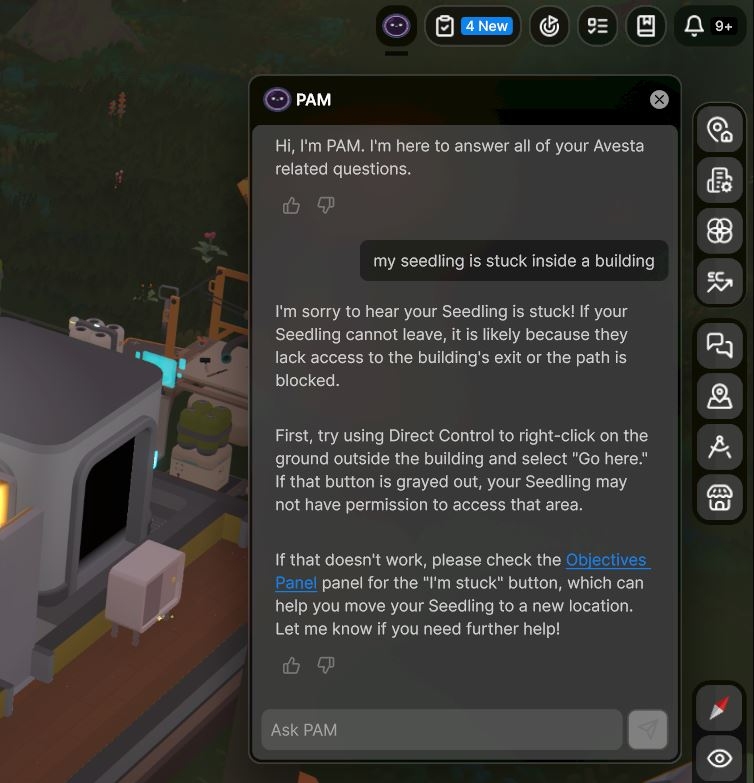
Messaging a simulated person about their mood, work or relationships ought to be one of SEED's most magical features. PAM, the in-game assistant, can also answer an ordinary question without sending you to a browser and six abandoned wiki tabs.
Seedling conversation is less convincing. During our reviewed build, replies could be repetitive, overlong or strangely detached from the relationship they were supposed to express. The personality underneath was sometimes visible, but the wording kept stepping in front of it.
The difference becomes clearer when you compare the two jobs. PAM needs to answer a question and get out of the way. Seedling Chat is trying to build a relationship, so every repeated phrase or strangely polished reply has more room to break the illusion. The personality can be there while the delivery keeps reminding me of the machinery underneath.
For me, the technology earns its place when it explains the simulation. It struggles when it tries to become the performance. I would rather read one plain, relevant sentence than three enthusiastic paragraphs about the emotional importance of a chair.
SEED is complicated because societies are complicated. That does not mean every confusing part is profound. In 0.3.1, routine jobs took too many passes through menus, and performance became less dependable around developed settlements.
Klang is already working through a long list of these problems, which is what Early Access is for. I am not awarding points for fixes before they arrive, though. A clearer error is not exciting trailer material, but it may save a Seedling from wasting half a day. SEED needs more of that honesty from its interface.
At the time of writing, the Starter Pack is €29.99. It includes the PC and Mac licence, the companion app, one permanent Platinum slot, one Seedling Life, and progression rewards. The €59.99 Pioneer Pack adds another permanent slot, another life, 35 Pollen, and clothing.
More lives and slots can be earned through progression or bought with Pollen. Another controlled Seedling means more labour and scheduling coverage. It does not buy automatic success, but paid capacity is useful capacity, and the review should say so plainly.
SEED is not yet available through Steam, although both Klang and the Steam page still point to a 2026 release. If you want to play now, you are buying through the standalone route.
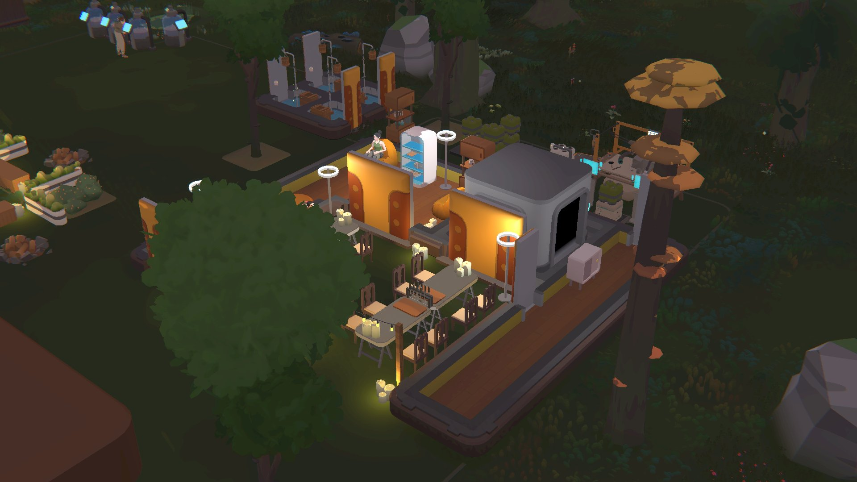
Buy it now if you enjoy management games, can tolerate an interface still learning how to explain itself and want other people to complicate your plans. Bring friends or join an established society; the latter is kinder because housing, work and experienced neighbours let you see the game before you try to govern it.
Wait if you want a polished solo loop, dependable trade without qualification, gentle onboarding or a world that pauses when real life gets busy. You can contribute with scheduled work and occasional check-ins, but running a business or society asks for far more attention.
Category scores are weighted to produce the final result
That score records our experience with build 0.3.1. Early Access will move the game, and the score may move with it. For this version, 7.8 feels right: remarkable social design held back by machinery that too often gets between the player and the society.
SEED is brilliant for the same reason it is exhausting: your work matters to people who are not you.
Founding a society turned food, medicine, storage, jobs, and land into shared responsibilities. The stories did not arrive from a quest designer. They appeared because somebody needed something, another person knew how to provide it, and the machinery occasionally chose that moment to fall over.
That is enough for a qualified recommendation. There is a rare and genuinely exciting society simulator here, but it is still wrapped in an Early Access interface, a recently troubled economy, and conversations that do not always know when to stop talking.
If you have a patient group, SEED is worth helping to build. If you want the machinery to disappear behind the fantasy, leave Avesta in the telescope a little longer.










Subnautica 2's Buddy System update is here, bringing a host of new co-op features including proximity voice chat, player revives, trading and emotes. We dive into what's new, what it means for multiplayer, and why having a friend nearby might actually make the terrifying ocean slightly more manageable.
Read More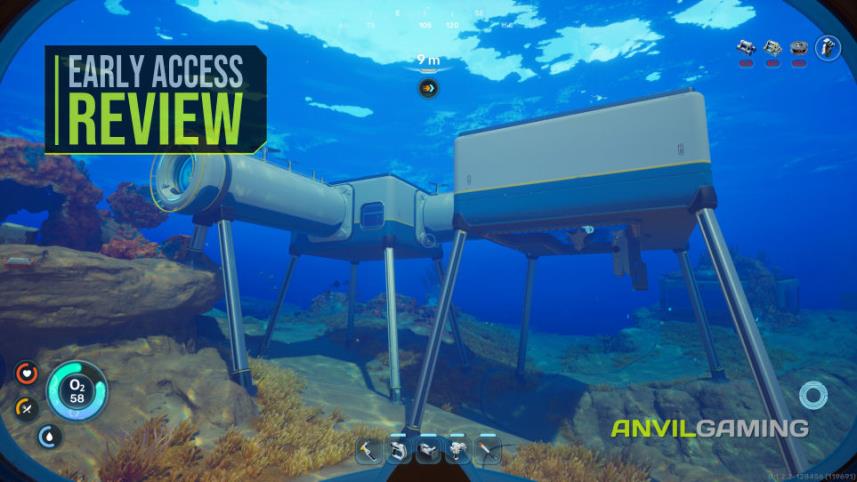
Subnautica 2 takes everything that made the original underwater survival adventure so compelling and drops us into a new alien world, with co-op finally joining the expedition. Beautiful, atmospheric and wonderfully addictive, it is already an excellent survival game despite being in Early Access. We dive into exploration, base building, survival, creatures and whether Subnautica 2 is worth buying now.
Read More
SEED turns work, trade, and survival into a genuinely shared society, but its rough interface and recently troubled economy make this an exciting, qualified recommendation.
Read More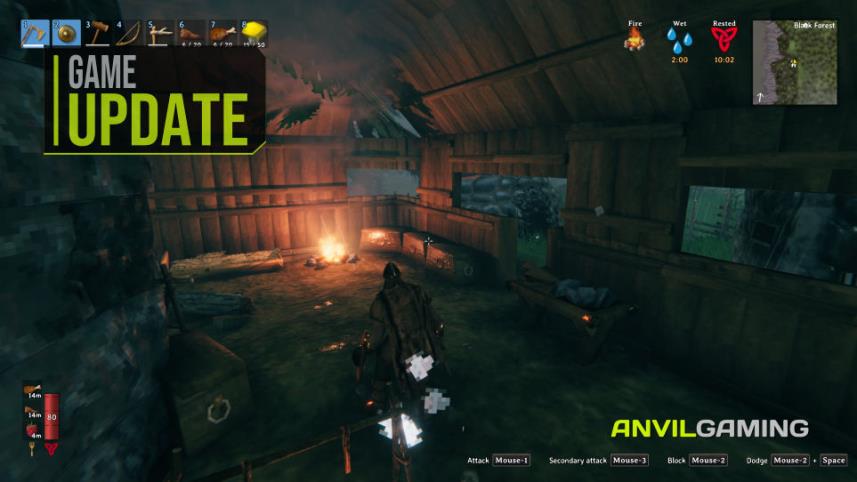
Valheim has finally reached 1.0 after five years in Early Access, but for players who have been there since the beginning, the appeal remains much the same. We look at why Iron Gate's survival game continues to bring us back, from its brilliant building system and rewarding exploration to combat, survival, co-op and the new Deep North.
Read More