GAMING
Loading





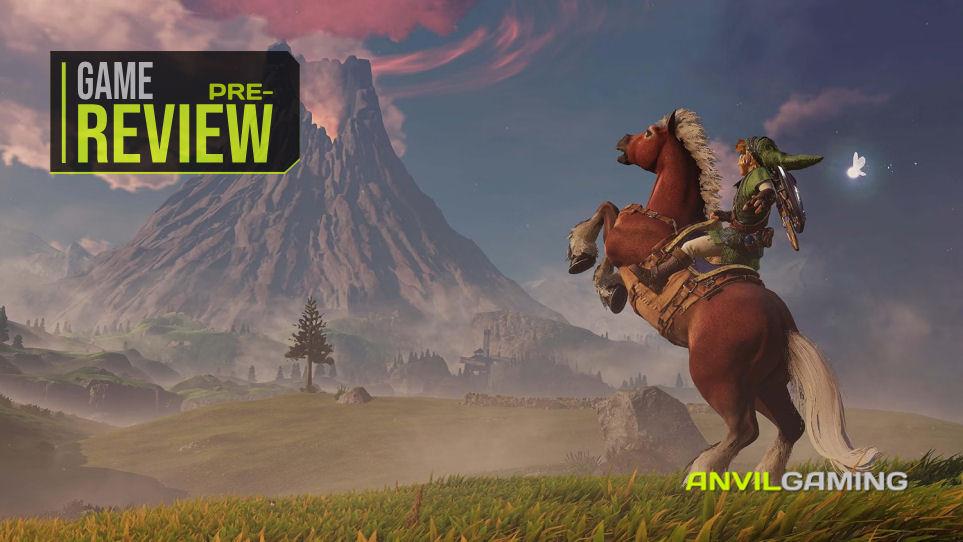
The Legend of Zelda: Ocarina of Time is coming back, and I have a slight problem with that.
Not because I don't want it back. Quite the opposite. Ocarina of Time is one of those games that has become so deeply embedded in gaming history that calling it a classic almost feels inadequate. It is one of the games that helped define what a 3D adventure could be, and for many people, myself included, it remains one of the most important Zelda games ever made.
The problem is that Nintendo is now remaking it for Nintendo Switch 2, and that creates a rather awkward question: how do you improve something that was already this good?
The answer, at least from everything Nintendo has shown so far, appears to be "very carefully". The remake launches on 5 November 2026 with completely overhauled visuals, modernised movement and camera controls, expanded dialogue, fully voiced cutscenes and a symphonic soundtrack. Link can also jump and dash, while the game introduces additional features designed to make the original adventure more approachable on modern hardware.
It is far too early to call the Ocarina of Time remake a great game because, quite importantly, I haven't played it yet. What I can say is that Nintendo appears to understand the assignment.
The original Ocarina of Time was already an extraordinary achievement when it arrived on Nintendo 64 in 1998. The Switch 2 version does not appear to be trying to replace that game so much as rebuild it using modern technology while retaining the adventure underneath.
That is exactly what I want from this remake. Give me the Hyrule I remember, make it look like the Hyrule I imagined it looked like in 1998, improve the bits that have inevitably aged and then get out of the way.

Let's get the obvious thing out of the way first.
Ocarina of Time is not a game that needs rescuing.
Released for the Nintendo 64 in 1998, it took the Zelda formula into three dimensions and somehow made it feel as though Nintendo had been building 3D adventures for decades. Hyrule Field became a place rather than simply a backdrop. Z-targeting gave sword combat a structure that still feels familiar today. Dungeons became enormous, memorable spaces rather than collections of rooms. The ocarina turned music into an actual part of progression rather than something you listened to between important bits.
And then there was the time travel.
You could begin the game as a child, grow into an adult and then experience a Hyrule that had changed around you. For a game released in 1998, that was the sort of thing that could make you stare at the television for a moment and wonder how Nintendo had managed to fit all of this into a cartridge.
Of course, some parts have aged. The camera can occasionally behave like it has somewhere else it would rather be. Movement is obviously from another era. Menus and interfaces were designed around hardware that now feels positively prehistoric. Some of the game's conventions are considerably less forgiving than modern Zelda games.
None of that makes the original bad.
It just means that Nintendo now has the opportunity to remove some of the friction without removing the thing underneath it.
There is something slightly amusing about looking at the original Ocarina of Time now.
We have spent the last couple of decades being spoiled by enormous open worlds, fully animated characters, cinematic performances, free cameras and games that seem to contain enough dialogue to qualify as audiobooks.
Ocarina of Time arrived when simply getting Link to walk around a convincing 3D world was impressive.
And yet the design still works.
That is perhaps the most impressive thing about it. Strip away the polygon count, the resolution and the technical limitations of the Nintendo 64 and there is an incredibly well-constructed adventure underneath.
The remake therefore has an unusual advantage. It does not need to invent reasons for us to care about Hyrule. Nintendo already did that nearly three decades ago.

The first thing that stands out in the new version is obviously the visual overhaul.
Nintendo is rebuilding the game from the ground up for Switch 2, with redesigned environments, updated materials, more detailed characters and a considerably more modern presentation. The difference between the 1998 game and what we have seen so far is enormous.
But this is where I think the remake has to be careful.
Making something technically impressive is easy compared with preserving its atmosphere.
The original had a particular visual language. Hyrule Field was bright and strangely empty. Kokiri Forest felt enclosed and mysterious. The temples had their own identity. The whole game had that slightly dreamlike quality that came from Nintendo pushing the Nintendo 64 hardware as far as it could possibly go.
The new version looks considerably more detailed, but what matters to me is whether it still feels like Ocarina of Time.
Pretty graphics are nice. Pretty graphics that still make me want to ride Epona across Hyrule at an unreasonable speed are considerably more important.
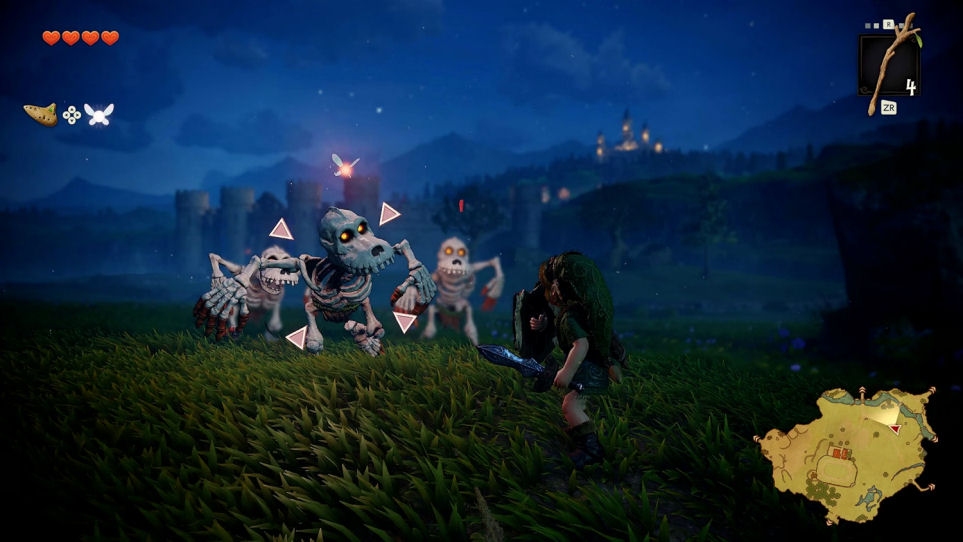
This is probably where I am most interested in seeing the finished game.
Nintendo has confirmed modernised movement and camera controls, including the ability to jump and dash using buttons. The camera can now be controlled more freely, which should make exploring Hyrule feel much more natural on modern hardware.
That sounds like a small thing until you remember how much time we spent fighting cameras in older 3D games.
There are moments in Ocarina of Time where the correct solution to a camera problem is essentially to stop moving and politely wait for the game to decide where it would like to look.
Modern controls should make those moments considerably less common.
The important part is that improved controls should make the original design easier to experience rather than changing how the game fundamentally works. That distinction is going to matter enormously.
Ocarina of Time has one of those soundtracks that does not need much introduction.
The moment you hear certain melodies, you know exactly where you are.
Nintendo has confirmed a refreshed soundtrack with symphonic orchestral music, and I am extremely curious about this one. The original music was constrained by the Nintendo 64 hardware, yet Koji Kondo managed to create themes that have remained recognisable for decades.
Giving those compositions a full orchestral treatment could be wonderful.
Music has always been a big part of how I experience games, so this is probably one of the changes I am watching most closely. There is a huge difference between simply making a soundtrack sound bigger and actually understanding what made the original compositions work in the first place.
If Nintendo gets that balance right, Hyrule could sound every bit as magical as it looks.
And if they get it wrong, I suspect I will have quite a lot to say about it. Music tends to do that to me.

Nintendo is also expanding the presentation of the story.
Characters now have fully voiced cutscenes and expanded dialogue, while locations have been remodelled with additional environmental detail. The day and night cycle also continues regardless of whether Link is exploring Hyrule Field or visiting settlements.
This is one of those changes that could work beautifully if handled properly.
Ocarina of Time has always had memorable characters. Giving them more room to breathe could make the world feel considerably more alive, particularly for players coming to the game for the first time.
The danger, obviously, is overdoing it.
There is a very fine line between "this character has more personality" and "this character has just explained something that I worked out myself thirty seconds ago".
Hopefully Nintendo has found the line.
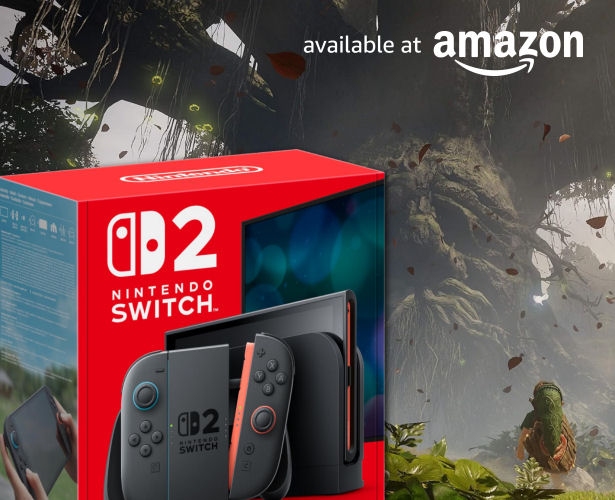
The other interesting part of this release is the hardware it is arriving on.
The Nintendo Switch 2 has a 7.9-inch 1080p LCD display with HDR and VRR support, while docked play can reach up to 4K resolution at 60fps on a compatible television. It also has 256GB of internal storage and considerably more processing power than the original Switch.
At the time of writing, the standard Switch 2 is around $499.99 USD / £395 GBP, although retailer pricing can vary. That is obviously considerably more money than simply buying a game, but it also means Ocarina of Time is arriving on hardware capable of giving Nintendo's 1998 adventure a very different presentation.
And there is something rather fitting about that.
Ocarina of Time was a technical showcase for the Nintendo 64. Nearly thirty years later, Nintendo is once again using a new Zelda release to show what its hardware can do.
Some things apparently never change.
It would be slightly strange to discuss modern Zelda without mentioning Breath of the Wild.
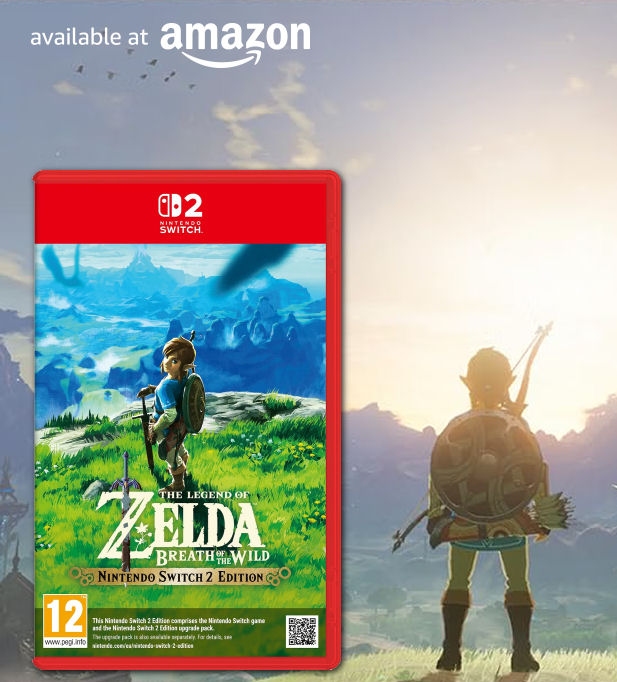
It changed the series in almost the opposite direction to Ocarina of Time. Rather than leading you through a tightly structured adventure, Breath of the Wild gives you a huge Hyrule and essentially asks what happens if Link is allowed to wander wherever he wants.
The result is a Zelda game built around curiosity.
You see a mountain and climb it. You spot something in the distance and investigate it. You find a shrine and immediately decide that you should probably complete it before doing whatever you were supposed to be doing.
Then three hours disappear.
The Switch 2 Edition adds higher resolution, improved performance, HDR, faster loading and additional features through Zelda Notes. It is a useful reminder of just how far the series has travelled since 1998.
And yet, underneath all those differences, the same fundamental Zelda idea remains: explore somewhere interesting, find something useful and then immediately go looking for something else.
Tears of the Kingdom took the foundations of Breath of the Wild and essentially asked what would happen if Nintendo gave Link considerably more ways to cause problems.
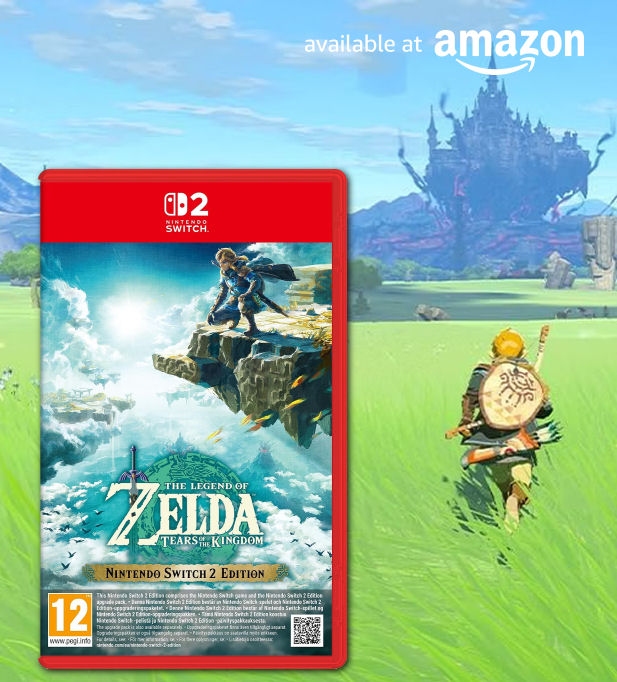
The answer was building.
Lots and lots of building.
The result is one of the most creatively open Zelda games Nintendo has ever made, with Hyrule expanded into the sky and depths as well as across the surface. Link's abilities encourage experimentation rather than simply handing him a key for the next door.
It is almost impossible to play Tears of the Kingdom without eventually building something that absolutely should not work and then discovering that, somehow, it does.
The Switch 2 Edition improves the presentation with higher resolution, improved performance, HDR and faster loading, while also adding Zelda Notes compatibility.
These games are very different from Ocarina of Time, but they provide useful context. Zelda has never stood still for very long.

This is the part where I become slightly demanding.
I don't need Nintendo to reinvent Ocarina of Time.
I don't need it to become Breath of the Wild with an ocarina. I don't need an enormous open world. I don't need crafting. I don't need weapon durability. I don't need Link to construct a functioning aircraft halfway through the Water Temple.
I want Ocarina of Time.
I want Kokiri Forest. I want Hyrule Field. I want Lon Lon Ranch. I want the temples. I want the music. I want Epona. I want to become Adult Link and suddenly realise that everything has gone rather badly wrong while I wasn't looking.
I want Nintendo to preserve the pacing, the sense of discovery and the slightly strange atmosphere that made the original so memorable.
Then fix the camera.
Please.
One of the more unusual additions is the way Nintendo is handling the ocarina.
Players can use button controls as normal, but Switch 2 also supports humming melodies through a compatible microphone. Nintendo is even offering the option to play the songs on a real ocarina.
I have absolutely no idea how many people will sit in their living room and genuinely play an ocarina into a Nintendo console.
I do, however, know that somebody is going to take this incredibly seriously.
And I respect that person already.
Nintendo is also introducing ZELDA NOTES through the Nintendo Switch App. The service can record accomplishments, provide additional guidance, test your knowledge and let you create and share ocarina melodies.
It is an interesting addition because Ocarina of Time is exactly the sort of game where players used to have physical notebooks filled with things like "THAT THING IN THE GRAVEYARD" and "GO BACK WHEN YOU ARE OLDER".
We now have smartphones for that.
I'm not sure this is progress, but it is certainly convenient.
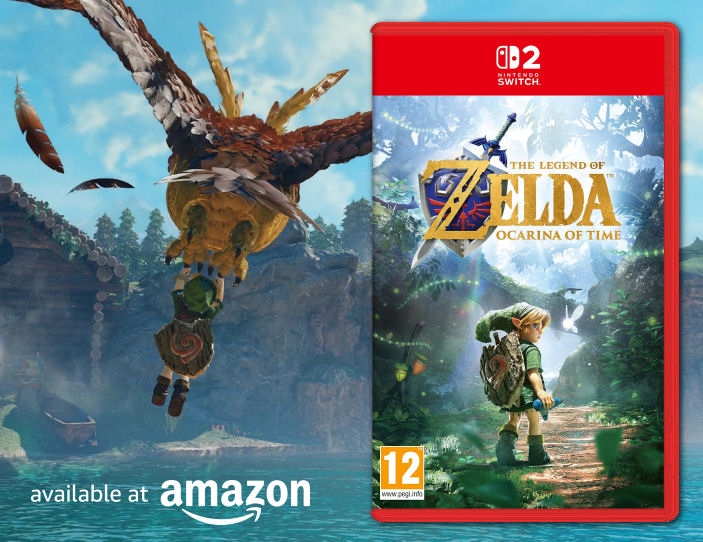
At the time of writing, the physical version of Ocarina of Time is priced at $69.99 USD / £58.99 GBP, while the digital version is $59.99 USD / £49.99 GBP. Retailer pricing can vary, so those figures should be treated as the current listed prices rather than a promise that your local shop will behave sensibly.
The physical release also comes with special textured foil cover artwork for the first print run, while stocks last.
If you're already planning to buy the remake, the Amazon listing is already available for pre-order.
Prices checked September 2026 and correct at the time of writing. Retailer pricing, promotions and availability may vary.
This is probably the most interesting part of the whole thing.
Everyone remembers Ocarina of Time slightly differently.
Some people remember the first time they entered Hyrule Field. Some remember the Forest Temple. Some remember discovering that the Water Temple was apparently designed by somebody who had a personal disagreement with the concept of user interface design.
I remember the feeling of playing it and constantly wondering what was going to happen next.
That feeling is much harder to remake than a texture.
Nintendo can rebuild every wall, animate every character and replace every sound effect with an orchestra. What matters is whether the remake still gives us that same sense of adventure.
If it does, then we may be looking at something rather special.
We won't know until we have played it.
That is the slightly awkward truth behind any pre-release review. Trailers can show us graphics. Nintendo can tell us about controls. We can listen to the new soundtrack and stare at screenshots until November.
None of that tells us what it actually feels like to play.
But everything Nintendo has shown so far suggests that the remake is being built around a sensible idea: preserve the adventure, modernise the experience and let a new generation discover why Ocarina of Time mattered in the first place.
And for somebody who played the original, that is probably enough to get me very interested.
Because there are very few games where the words "they are remaking it" immediately produce equal amounts of excitement and mild panic.
Ocarina of Time is one of them.

The Legend of Zelda: Ocarina of Time is one of the most important games in Nintendo's history, and that makes this remake considerably more interesting than a simple graphical upgrade.
Nintendo is rebuilding a game that already worked. The challenge is not creating a great Zelda adventure. It is preserving the one that already exists while removing nearly thirty years of technical friction.
The early signs are encouraging. The visuals have been completely reworked, the controls have been modernised, the soundtrack has been expanded into a symphonic presentation and the world is being given more life through expanded dialogue and fully voiced scenes.
But the real test will come when I pick up the controller and step back into Hyrule.
If the remake can make me forget that I already know where I'm going, what I'm supposed to do and which dungeon is about to make me question my life choices, then Nintendo will have done something rather impressive.
For now, I'm waiting.
Not particularly patiently.
November 5th cannot come quickly enough.
Buy The Legend of Zelda: Ocarina of Time at Amazon Today








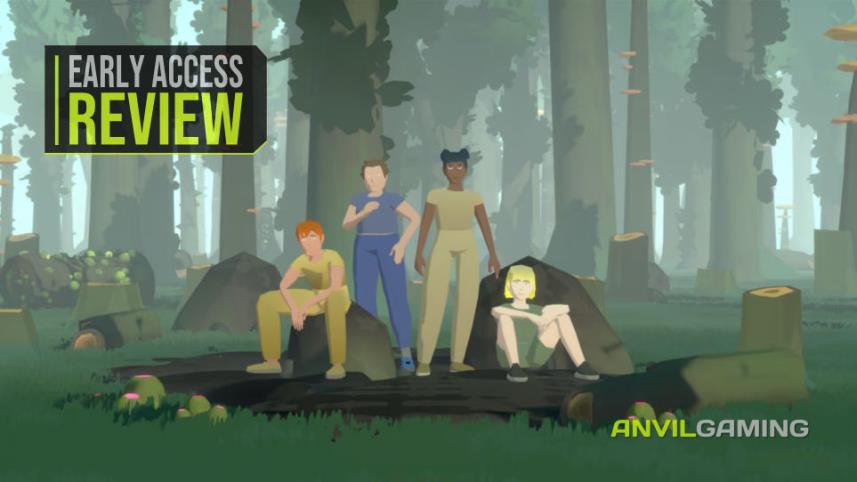
SEED turns work, trade, and survival into a genuinely shared society, but its rough interface and recently troubled economy make this an exciting, qualified recommendation.
Read More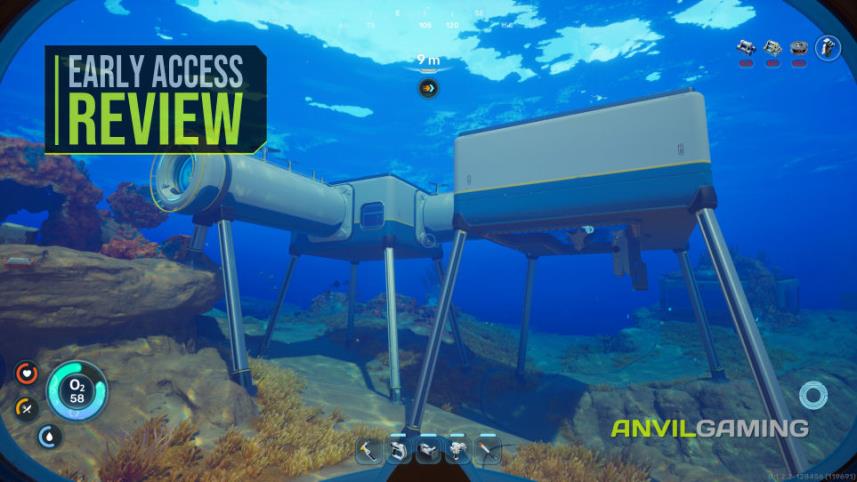
Subnautica 2 takes everything that made the original underwater survival adventure so compelling and drops us into a new alien world, with co-op finally joining the expedition. Beautiful, atmospheric and wonderfully addictive, it is already an excellent survival game despite being in Early Access. We dive into exploration, base building, survival, creatures and whether Subnautica 2 is worth buying now.
Read More
Subnautica 2's Buddy System update is here, bringing a host of new co-op features including proximity voice chat, player revives, trading and emotes. We dive into what's new, what it means for multiplayer, and why having a friend nearby might actually make the terrifying ocean slightly more manageable.
Read More
Valheim has finally reached 1.0 after five years in Early Access, but for players who have been there since the beginning, the appeal remains much the same. We look at why Iron Gate's survival game continues to bring us back, from its brilliant building system and rewarding exploration to combat, survival, co-op and the new Deep North.
Read More
Sixty seconds of Wings was all Aion gave you in 2009. Its sequel lets you fly nearly everywhere, but Korea got it first and found gear upgrades in the cash shop. A day-one verdict on the sky, the combat, the grind, and the Founder's Packs before early access opens.
Read More
Medieval Dynasty combines survival, crafting, farming and settlement management into a remarkably cohesive first-person experience. We build a settlement from the ground up, recruit its residents, manage its production and see why Render Cube's continued support makes this medieval world so easy to return to.
Read More