
GAMING
Loading





Nothing pauses. That is the whole answer, and everything useful about SEED follows from it.
Your Seedling keeps working, eating, sleeping, talking to people and making decisions while you are not there. It is not suspended in a menu and it is not fast-forwarded when you return. It simply carries on, and what you find when you come back is the result of arrangements you made before you left.
So the question worth asking is not "is my Seedling safe while I am offline". It is "what did I leave running?".
Written against SEED 0.3.3, September 2026, checked against the 0.3.1, 0.3.2 and 0.3.3 patch notes, and against the game's own character data at content release 3.3. Version 0.4, City Life, is announced but not shipped, and adds aging and further Seedling autonomy - this guide will need revisiting when it lands.
All of it. Specifically:
The one thing that does not continue is your judgement. Everything your Seedling does in your absence comes from its schedule, its priorities, and its own decision-making - which is better than it sounds, and worse than you would like.
Autonomy arrives in stages, and knowing the stages tells you how long a gap you can afford.
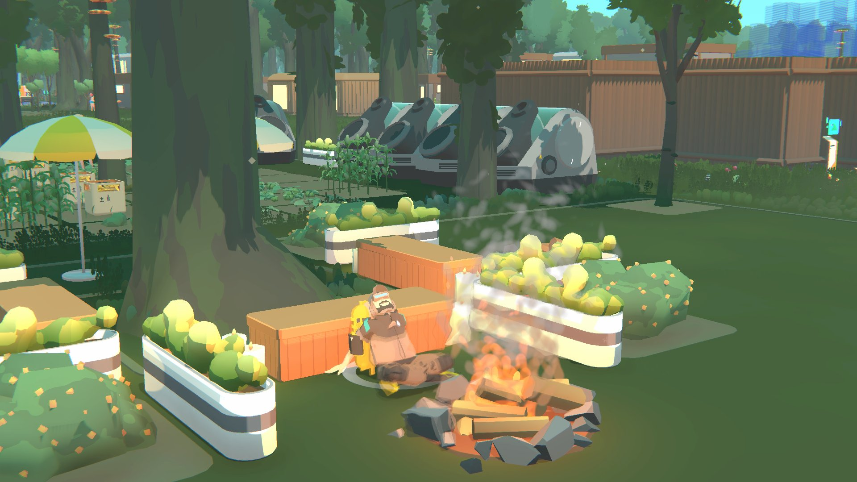
In the short term, it fills the time. A Seedling with nothing scheduled does not stand still. There are two dozen distinct idle behaviours in the game, and they run the full emotional range - singing, humming, laughing, stretching, watching clouds and taking a walk at one end; sulking with arms folded, fretting, grumbling, fuming, and feeling bored at the other.
That range is worth noticing, because the set is not neutral filler. It contains behaviours nobody would describe as content - sulking, fuming, fretting - alongside ones nobody would describe as unhappy.
But do not spend long reading body language, because the game will simply tell you. The first thing to do on returning is to open the Seedling's panel, where mood is a named state on a two-axis grid- from Miserable through Frustrated to Ecstatic, fifteen of them - and beneath it sits a list of active thoughts, each naming its own cause and how long it has left. Filthy! - Hygiene, while unmet. Nauseating Room - 4h 28m left.
That list is the log of your absence. It tells you what went wrong, in what order, and whether it is still going wrong or merely still being felt. A gap you were nervous about reads in about ten seconds.
After a day, it takes over - and the ladder is specified. The game's character data sets three autonomy tiers by elapsed hours: prompted at 24, assertive at 72, independent at 168 - one week. A prompted Seedling asks and waits four hours for an answer; an assertive one waits two; an independent one has stopped asking. Underneath that sit the numbers governing what it will actually do: it considers its top three job options, it will only leave a job for one paying 1.5 times better, and it gives you a two-hour window to respond before acting. Turn it down, and the question goes away for a day on a new job, three days on a switch.
Read those tiers as the real answer to "how long can I be away". A day is a nudge. Three days is a Seedling that has stopped waiting for you. A week is a Seedling running its own life, which is the design working as intended rather than a failure state - but it is not the Seedling you left.
It spends, but modestly. The default daily autonomy budget was cut from 300 to 100 in 0.3.1, so an unattended Seedling is a more conservative version of itself than it used to be.

Three things, in the order they will bite you.

Food, first and fastest. Since 0.3.1, food spoils inside a Seedling's inventory, not just in storage. A well-meaning stock of meals handed over before you log off can rot in its pockets. Berries are the worst offender - nutritious and quick to spoil. Leave preserved food rather than fresh, and leave it where it belongs rather than carried.

Mood, quietly, and it compounds. Energy recovers faster in a good mood, so a Seedling that becomes miserable also becomes slow, which makes it worse at meeting its own needs, which makes it more miserable. It is a loop, and it runs unattended just as happily as anything else. Since 0.3.3, a Seedling at least checks whether it has the energy for a long task before starting it, which stops the most spectacular version.
The loop is also why the thoughts list is worth reading rather than skimming. A thought with a timer on it is already ending on its own. A thought marked while unmet is still running, and will keep pulling until the cause is fixed. Those are two different jobs, and only one of them is urgent.
Everything a task was supposed to cover. This is the one that kills Seedlings. Water in a barrel is not water in a Seedling. If the task, the equipment, or the schedule slot is missing, the supply may as well not exist - and being away is exactly when nobody is there to notice.

PAM's manual states that a year on Avesta is 24 in-game days. Seedlings age on that clock and eventually die, and the Graveyard window records what killed them.
Do that arithmetic before planning a fortnight away. A week of your time is a meaningful fraction of a Seedling's life rather than a pause between sessions, and it is the most useful number in the game for judging how long you can safely leave one running.
The practical version of all of the above. Before you close the client:
The habit to form: your last action of a session should be about the next few days, not the last few minutes.
There is a larger form of logging off, and it is the reason all of the above is designed the way it is.
SEED has no NPCs. Not few - none. Every Seedling on Avesta belongs to a Cultivator, which means that when someone stops playing for good, their Seedling does not vanish or freeze. It carries on autonomously, working and ageing and eventually dying, as part of the world everyone else lives in.
So the ambient population of Avesta is made of other people's lives, still running after the people who started them have gone. The stranger your Seedling passes in the street may be somebody's abandoned character, three months into a life nobody is watching.
Logging off for the evening is the small, reversible version of that. The game treats both the same way, because to the world there is no difference - and once you have understood that, the way SEED handles your absence stops looking like a limitation and starts looking like the point.











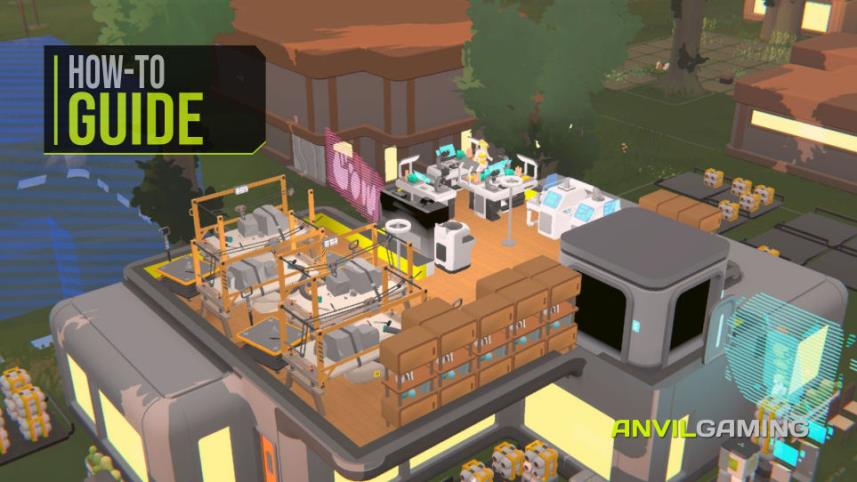
Every crafting task in SEED shows three times, and most players read the wrong one. Total Time only says when the output appears - Work Time is what the job actually costs your settlement. Read them that way and the obvious recipe is often the expensive one.
Read More
SEED puts you in charge of people who make their own decisions, on a planet that keeps running whether or not you are logged in. One real hour is one day on Avesta. Here is what that actually means to play, what Early Access still gets wrong, and who should not buy it.
Read More
An onboarding guide to a new player's first hours in SEED on Avesta: what a Seedling actually is, the survival mistakes that cost a day, why the Scheduler matters more than anything you build, and what to ignore until later.
Read More
Health in SEED is not a bar you refill. It is a system of specific conditions, severity tiers and sixteen medical specialisms — and the serious end of it depends on other people.
Read More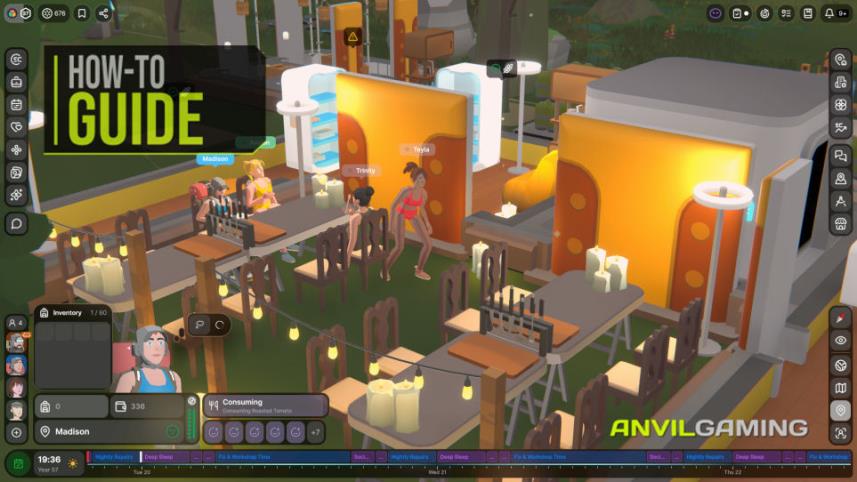
Your Seedling isn't lazy - it's following orders. Every event in SEED's Scheduler has its own priority list, and anything past the top few is wallpaper. How events work, why needs deserve their own hour, when a direct order beats the schedule, and a week you can copy.
Read More
A SEED hospital can have a skilled doctor, medicine on hand, and opening hours, yet still collect one-star 'wasted visit' reviews. This guide turns seven weeks of community troubleshooting into one current setup for services, staffing, stock access, and patient schedules.
Read More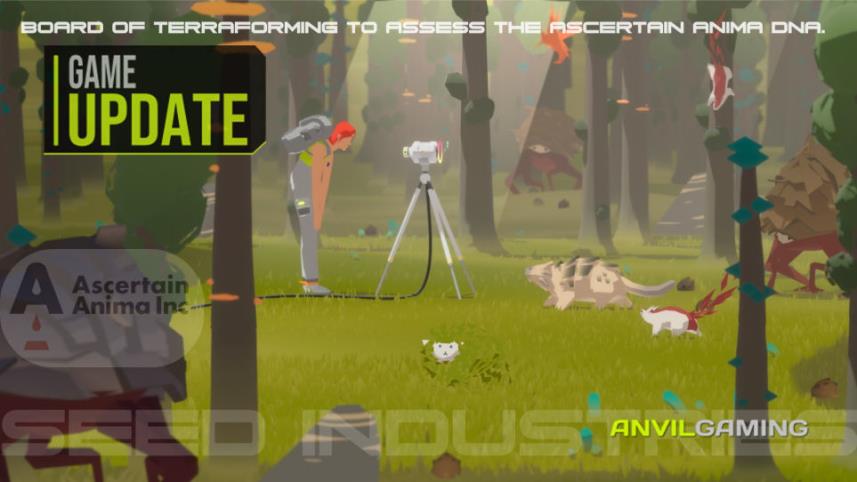
SEED's Dezima Donations event is coming to an end, but the story surrounding it may be far from finished. Spark posts have revealed an Axiom attack, a laboratory breach and DNA reaching Avesta's surface. Now, with a suspicious image showing animals and an unexpected reward teased, we investigate whether Klang has been quietly preparing the planet for new life.
Read More
Klang named its own broken system in public and came back three days later having fixed it four separate ways. The fix list is long enough to finally itemise what trade was costing people. The drone rebalance is the bill, and it charges only those who tidy up.
Read More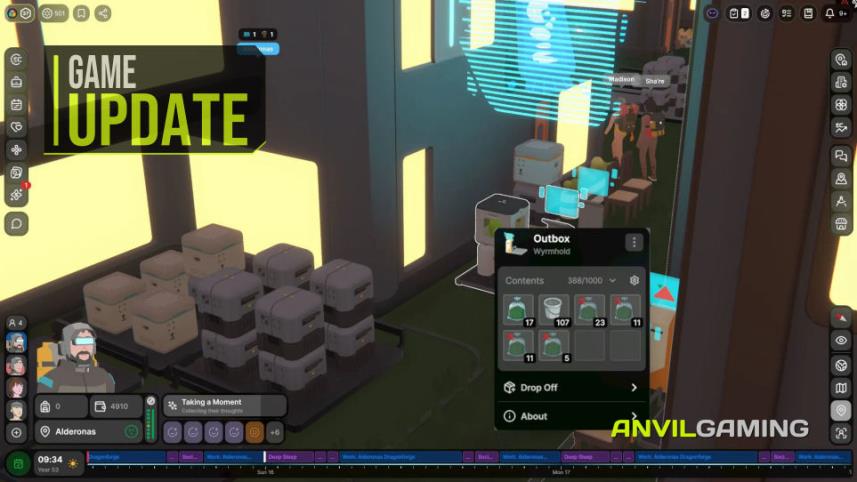
Klang says SEED market failures have fallen from roughly 20% to 4%, but that is not an all-clear. Buyers need free inbox space and scheduled haulers, while responsibility for a lost shipment can change at the Spaceport. Here is who carries the risk now.
Read More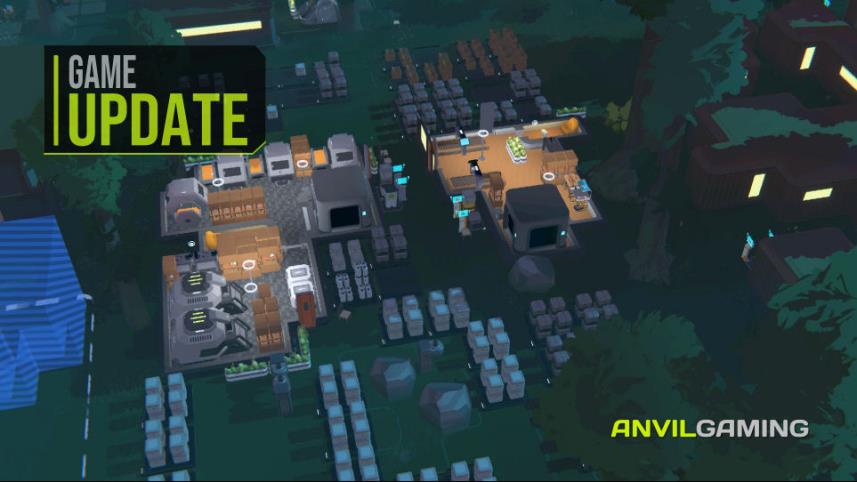
SEED 0.3.4 takes rare ore out of repairs, teaches schedules to explain their failures and stops trees growing back. It also rebalances storage - and because the new capacities only apply to containers you move, tidying up is now the most expensive thing you can do.
Read More
Mundi hosted the Covital Show on SEED's official channel and put the roadmap on screen. 0.4 is City Life - law and order, electricity, organisations, building subdivision, bars. And the board says we are nowhere near the end of it.
Read More
SEED 0.3.3 caps a single Cultivator's votes at 15% of the society population, puts a price on firing a Seedling, and spends the rest of a very long changelog teaching the game to explain its own failures.
Read More
Wyrmhold does not run open recruitment. We take people for a need, after a conversation. This is what the Hold expects of a resident, what it provides in return, who it is honestly not for, and where to come and talk to us.
Read More
Wyrmhold is our society on Avesta. Its founding stories are not decoration - each one encodes a SEED system that will decide whether your own society survives. Here are three of them, and what they are really about.
Read More
The first record of what Wyrmhold actually did. One month, almost no visible expansion, and a great deal of infrastructure - the survey, the Kernel, the Dragonforge Ward workshops, the Elderwyrm department, an election, and the Hold's first registered business.
Read More