
GAMING
Loading





Wyrmhold is our society on Avesta. This is the first of its records to be published outside the Hold.
Before the stories, the rule that governs them. Wyrmhold writes its lore under a single working principle: game fact first, myth second. Nothing in our records is meant to replace how SEED actually works. The myth is how we remember the systems - and if a story ever contradicts the game, the game wins and the story gets rewritten.
That constraint is why these are worth reading even if you never set foot in Wyrmhold. Each founding story is a SEED lesson wearing better clothes.
Every society on Avesta faces the same question in its first week, usually without noticing: who decides things?
The obvious answer is whoever founded it. It is also the answer that kills societies. In our own founding records the argument is set out plainly - some wanted a named chief who could settle disputes quickly, some wanted every trade to govern itself, some wanted the Cultivators to decide everything because their sight reached further.
What settled it was not idealism. It was absence.
A society built around one voice could decide nothing once that voice went quiet. A trade held by one house could vanish when that house failed. A store watched by one keeper could empty when the keeper was gone.
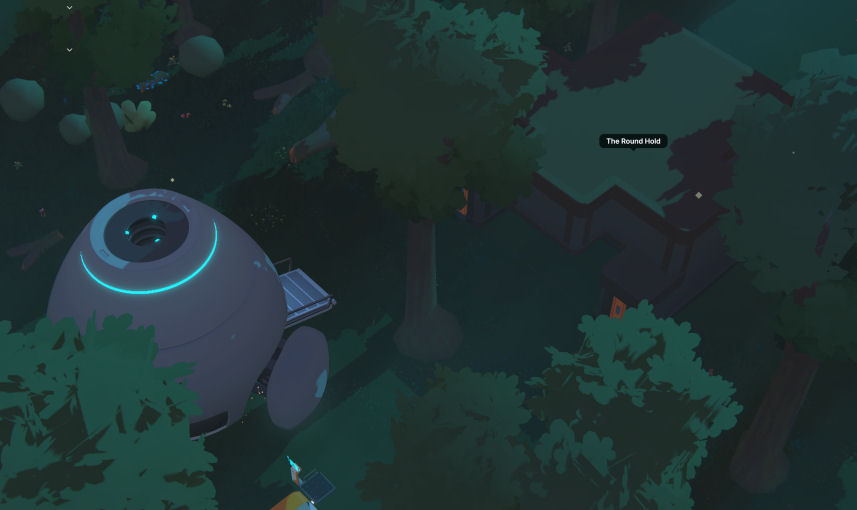
So the founders made a round table and refused to place a head at it.
That is the Round Hold, and the passage that gave Wyrmhold its name for itself comes a few lines later, when a resident asks what the settlement intends to become:
A fortress exists against the world. A kingdom exists over people. A market exists while trade is profitable. A Hold exists because something inside it is worth keeping.
What that is, mechanically: SEED gives societies roles, permissions, ballots and offices. It is entirely possible to run one as a personal fiefdom where a single player holds every permission - and it works beautifully right up until that player has a bad week, a house move, or simply loses interest.
Departments make this sharper. In SEED a department can only be created by the society's Mayor, and running one requires a Seedling who has been granted a leadership role. That is a real bottleneck, and it is exactly the kind of thing that turns into a dead society when the one person holding it disappears.
Wyrmhold's answer is a rule rather than a hope: no permission exists without someone answerable for it, and no seat sits above the others. In our one election so far, the Hold elected Avalon - a founder's Seedling, but elected rather than installed.
The transferable lesson: Before your society gets comfortable, ask who is currently irreplaceable. Then make them replaceable. That is not a slight on them; it is the only way the thing survives them.
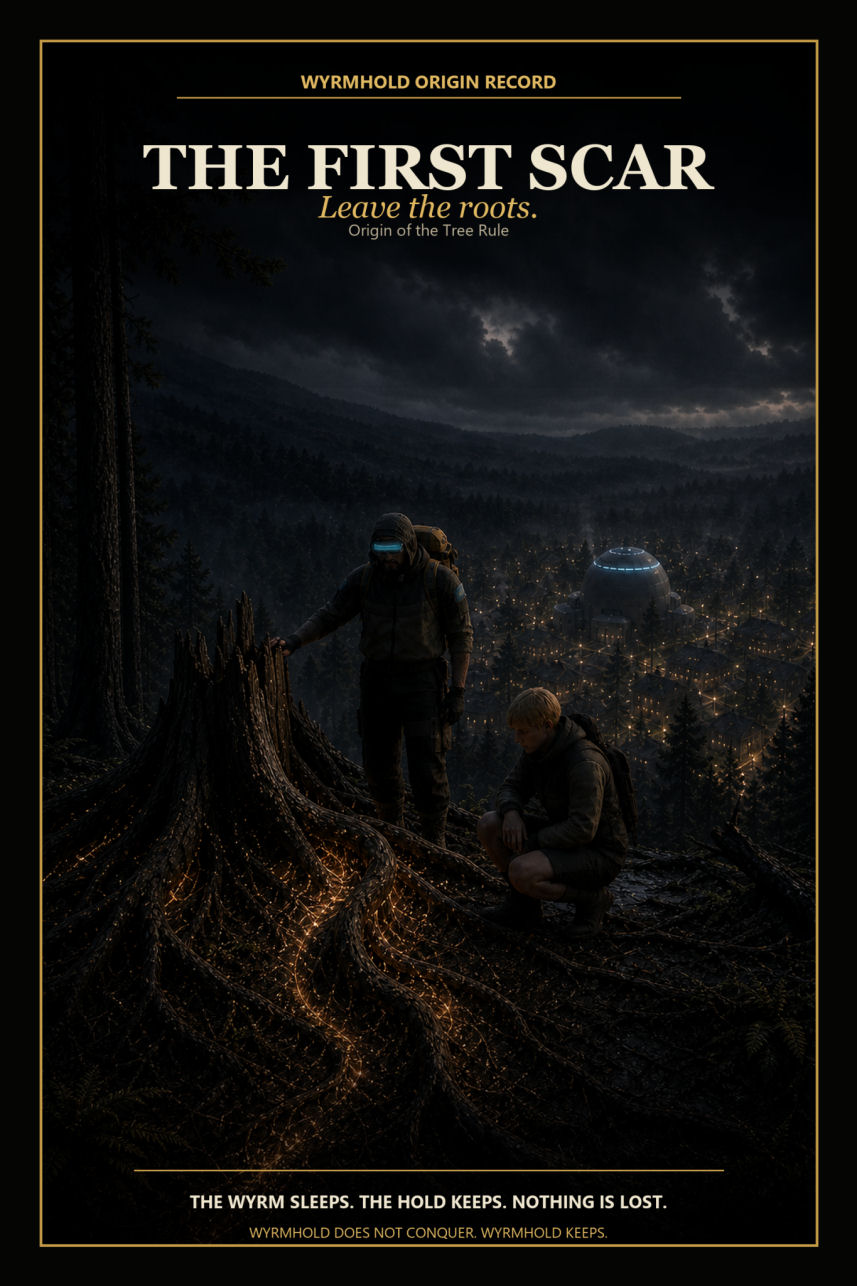
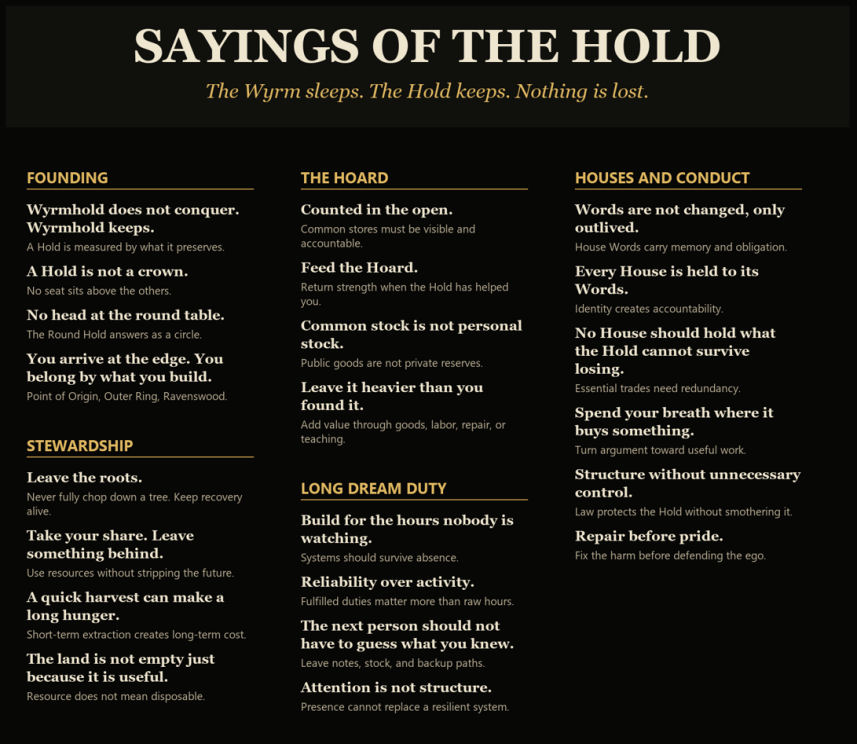
The oldest law in Wyrmhold is one a child could repeat. Never fully chop down a tree.
Outsiders sometimes take it for decorative frontier superstition. It is not. Our records place its origin in a grove called the Low Green, cut by a timber crew who were not villains and not griefers - the account is careful about this - but builders under pressure, certain the Hold needed their work more than it needed caution.
By dusk the largest tree was down. By midnight, six more. By morning the ground no longer held the water, and the wood taken from that grove solved one building problem and created seven others: mud across the work road, a shifted storage shed, drowned crops, a broken cart, wasted labour.
What the Round Hold did next is the part worth borrowing. It did not hunt for someone to punish. It walked to the stump in daylight and counted the damage where everyone could see it. Then it ordered the felled timber used, because wasting it would have made the harm larger.
You are not told, "Do not take."
You are told, "Know what you are taking from."
What that is, mechanically: Avesta's resources are not an infinite pile waiting to be moved, and a society that strips its immediate surroundings pays for it in hauling distance, logistics load and time - the costs land later and on everybody, which is exactly what makes them easy to ignore in the moment.
Being straight about this: the Tree Rule is stricter than anything SEED requires. It is Wyrmhold law, not a game mechanic, and we chose it deliberately. A rule you can repeat in four words gets followed. A nuanced sustainability policy gets argued about until the grove is gone.
The transferable lesson:Leave the roots outgrew forestry almost immediately. When a House proposes something that eats shared land or scarce material, older residents ask what roots the plan leaves behind - reserves, replacements, apprentices, redundancy, goodwill. Do not remove the thing that lets the system recover.
This is the one that matters most, because it is about SEED's defining feature rather than any society's house style.
Your Seedlings do not stop when you log off. Avesta keeps running, schedules keep executing, needs keep accruing. That is the whole premise of the game, and it is the thing new players understand last.
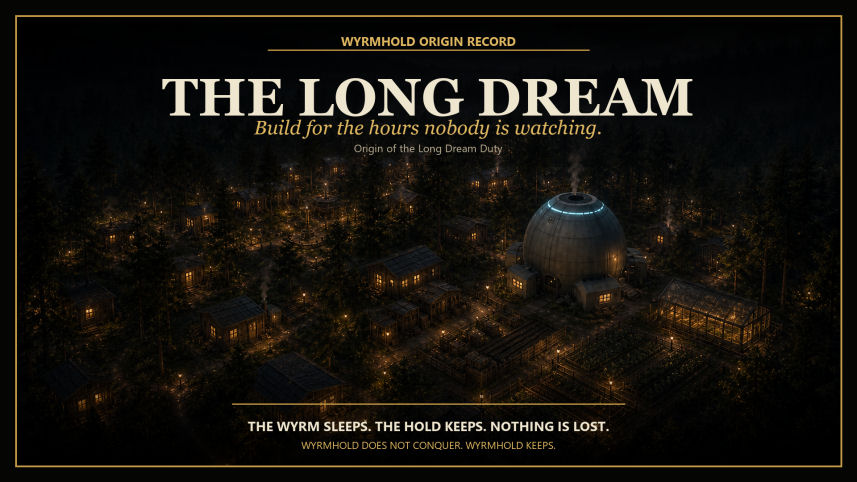
Wyrmhold calls the time away the Long Dream. Our record of the first one is careful to note that it did not begin as a disaster - and that this is precisely why we fear it.
Four failures, none of them dramatic. A cart assigned to the wrong route, so the mill waited for grain and the bakery waited for flour. A common store that several residents drew from for perfectly reasonable purposes, none enough to blame alone, nobody counting the combined effect. A job only one person understood, done faithfully while they were present - which was the problem. And then pride: people who noticed small gaps and did not want to trouble the Round Hold, believing they would fix it later.
Attention was gone. Structure remained. And structure was not yet good enough.
The Hold did not collapse. It was worse in a more useful way - a warning that could still be answered. And what the Round Hold named was not a culprit but a mistake in how the settlement had been built:
Wyrmhold had been built as if being watched were the same as being ready.

What that is, mechanically: Everything in SEED that fails while you are offline fails silently. Inputs run dry, a machine stops, a Seedling's need goes unmet, and none of it announces itself. You come back to consequences rather than alerts.
From that came Long Dream Duty: leave your operations stocked, scheduled and capable of running without you. And from it came the standard Wyrmhold actually judges people by - reliability over activity. A resident who plays less but leaves clear schedules, stocked inputs, honest notes and a trained second hand serves the Hold better than one who plays for hours and leaves chaos behind.
It also produced the Night Ledger, which started as a board near the common stores where anyone leaving important work marked what they had stocked, what would run out first, and who could act in their absence. The point was never paperwork. It was that the next person should not have to guess what you knew.
The transferable lesson:Before you log off, five questions:
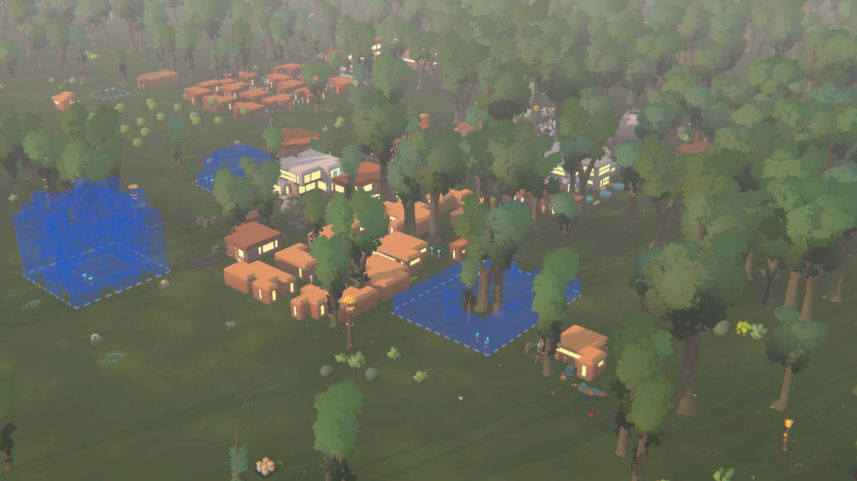
You will have noticed we have not said what the Wyrm is.
That is deliberate, and the Round Hold has never ruled on it. It may be myth. It may be a name the Cultivators used when Seedlings asked why unseen hands sometimes changed the fate of things. It may be persistence itself, or the society understood as one living thing - coiled from roads, work, stores, Houses, and promises.
Wyrmhold does not need the Wyrm proven. It needs the Hold kept.







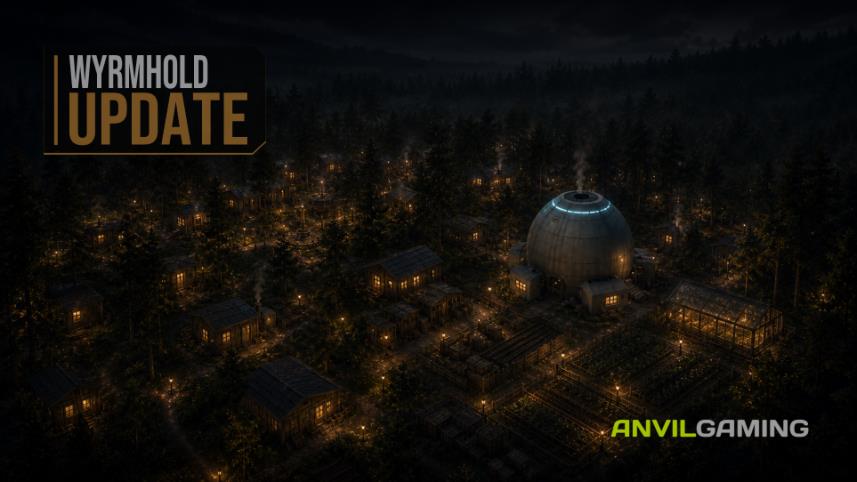
The first record of what Wyrmhold actually did. One month, almost no visible expansion, and a great deal of infrastructure - the survey, the Kernel, the Dragonforge Ward workshops, the Elderwyrm department, an election, and the Hold's first registered business.
Read More
Wyrmhold is our society on Avesta. Its founding stories are not decoration - each one encodes a SEED system that will decide whether your own society survives. Here are three of them, and what they are really about.
Read More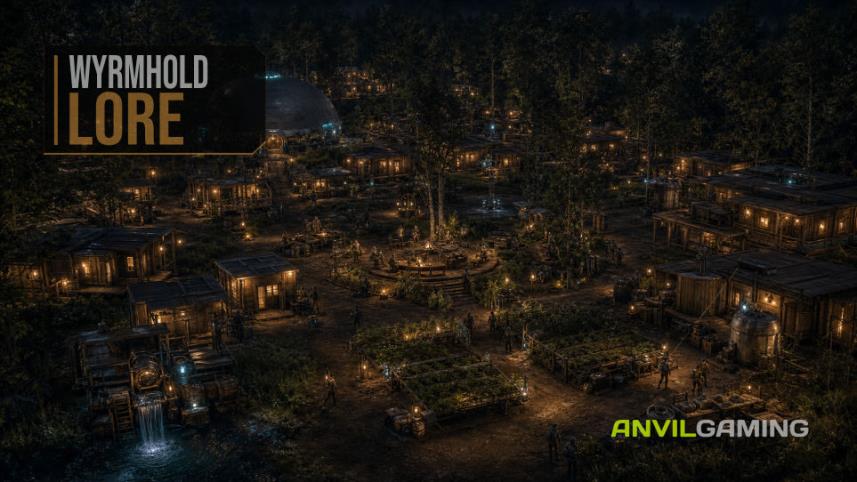
Wyrmhold does not run open recruitment. We take people for a need, after a conversation. This is what the Hold expects of a resident, what it provides in return, who it is honestly not for, and where to come and talk to us.
Read More