
GAMING
Loading





Patch 0.3.3 | Notes published 31 August 2026 | Patch releases 1 September
Klang has decided that owning a large family should not be the same thing as owning an election.
The 0.3.3 notes went up today and the patch lands tomorrow, so nobody has played this build, ourselves included. What follows is our reading of the official notes and the dev blog published alongside them. Patch notes describe intended behaviour; Avesta decides what survives contact with actual Seedlings.
There is exactly one new rule in this patch, and it is the voting cap. Everything else — and there is a great deal of everything else — is the game learning to explain itself.
A single Cultivator's votes in any one ballot will be capped at 15 per cent of the society's Seedling population, never below three, across elections, laws, banishments, constitution changes and confidence votes.
Firing a Seedling will cost the organisation one full day's wage in severance, recorded in the balance history. Resignation still pays nothing extra.
Society statistics that stopped recording new-market activity — GDP, cost of goods, trading balance, most-traded items — should start working again.
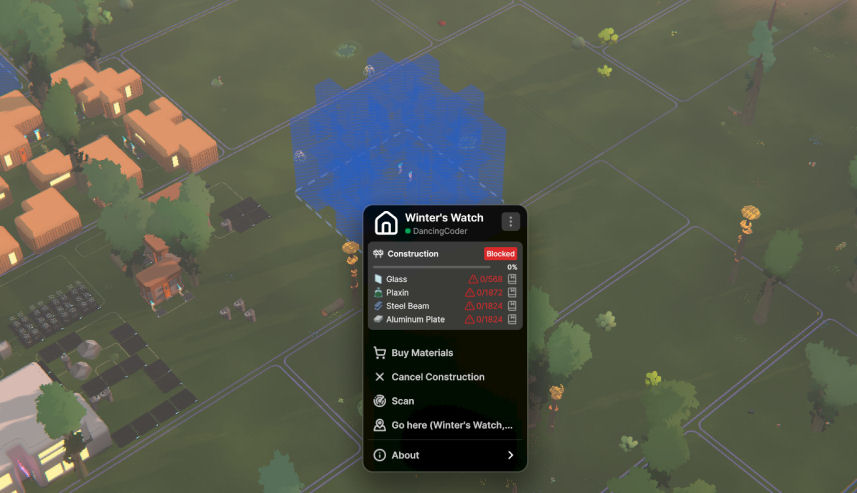
A construction that cannot proceed will name the specific missing resources and how many of each, instead of shrugging and saying “Missing Resources”.
Seedlings will check the projected energy cost before starting a long job, rather than beginning and abandoning it until somebody notices.
Subway stations will have to be placed within 300 metres of the nearest station in the same network.
From tomorrow, the votes a single Cultivator can submit in any one voting process are capped at 15 per cent of the society's current Seedling population, with a floor of three. It applies to every ballot a society can hold: elections, law proposals, banishments, constitutional changes and votes of no confidence.
Klang's worked examples, from its own dev blog:
The reasoning is refreshingly blunt. Each Seedling was given a vote deliberately, because each is meant to be a person rather than a unit. The trouble, in Klang's words, is that the system became easily exploitable, and a Cultivator with enough Seedlings could sway any vote — which the studio says it watched happen more than once. The cap is explicitly an interim measure. The stated destination is something closer to citizenship, where a Seedling earns a say by contributing to the society over time.
That is the right target. A vote should cost something other than a slot purchase.
Worth saying plainly, because this will be misread by tomorrow afternoon. No Seedling has been removed, shut out or reduced. You can still run as many Seedlings as you have slots and lives for, and they can all still cast a vote. The only change is how many of those votes are counted towards the result of a single ballot.
If you have eight Seedlings in a society of forty, all eight can vote and six will count.
Klang's example continues: as that society reaches 47 Seedlings, all eight of your votes count again.
Fifteen per cent of 47 is 7.05. By the rule as published, that is seven votes, not eight. To get eight counted you would need a population of about 53 if fractions are dropped, or 50 if they round to the nearest whole vote. Klang has not said how fractions are handled, and its own example does not settle it.
This is a small thing that becomes a large thing on the evening of a close ballot. If your society is planning a vote where the margin matters, check what the interface actually credits you before you count on a number, and treat the published examples as illustrative rather than exact.

Small societies are barely touched: below roughly 20 Seedlings, the three-vote floor is doing the work. The cap bites in the middle, where one committed Cultivator with a large household could previously decide a banishment on their own.
If your society has been settling contested questions on raw numbers, that stops tomorrow, and the argument you have been avoiding arrives on schedule. Now is a sensible moment to write down how a proposal is made, what evidence a banishment needs and who is expected to canvass whom — the same due-process homework that City-tier Judges introduced in the previous patch.
When a Seedling is fired, the organisation must pay one full day's wage as severance, and it appears in the balance history as a Severance Pay entry. Resigning still carries no extra payment.
It is a small rule with a long shadow. Dismissal now has a price and, more usefully, a record. An organisation that churns through staff will leave a trail in its own books, which is exactly the sort of thing a society that cares about its businesses can go and read.
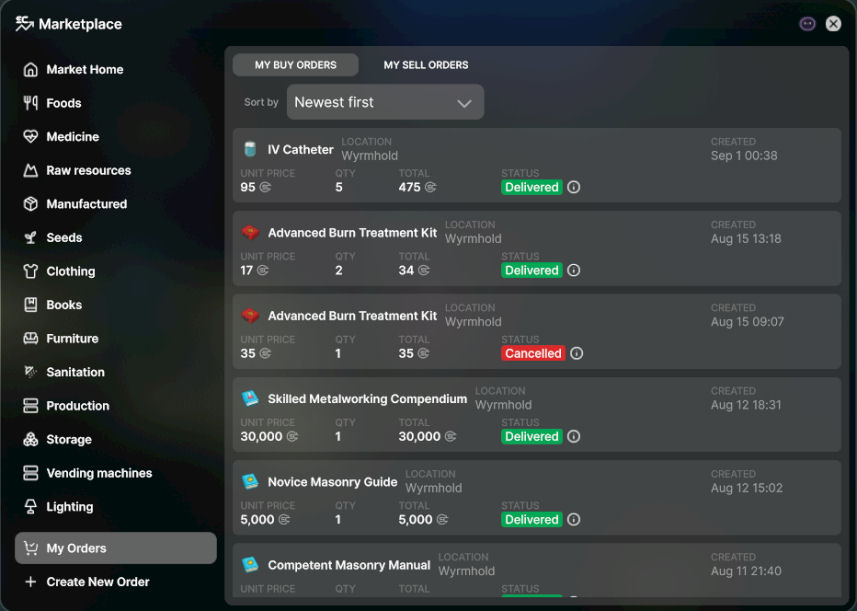
The market fixes in 0.3.3 are less about trade and more about record-keeping, which is arguably overdue.
Society statistics — GDP, cost of goods, trading balance, most-traded items — were not recording data from the new market at all, and should now resume. Partially matched Buy Now orders should stop showing as Active forever after the matched portion delivers. A contract termination will show the proposing party the waiting state and the Force Termination option instead of a blank header. A Global Market purchase whose destination building was demolished mid-transit should stop hanging in delivery with no refund. A cross-society sale that fails at a spaceport will tell both sides whose spaceport could not send the goods.
Elsewhere, the Pollen Exchange gains distinct tabs and a chart of pollen prices over time, and VAT categories are picked from an expandable tree rather than a wall of chips.
The statistics repair is the one we would watch. A player economy needs more than transactions; it needs figures that leaders and business owners can make decisions from. If GDP and trade balance have been quietly blind since the new market arrived, then every society-level economic judgement made in that window rested on a gap.
None of this is an all-clear. Klang's market status report of 21 August promised an answer on compensation for lost goods and locked SeedCoin by 28 August, and at the time of writing no such answer has been published. Until it is, the studio's own precautions still apply: keep your order IDs, clear destination storage, and don't relist goods tied up in a stuck order.
Read the changelog in one sitting and a pattern emerges. Over and over, a silent failure is replaced by a stated reason.
A construction that cannot proceed will name the missing resources and the quantities needed. Production conditions will say “Plot storage contains” when a machine counts storage across the plot, rather than the misleading “Building storage contains”. A production order set to run until a target stock level will show what is actually in storage instead of the number of completed runs. A bed in a room that is too bright will warn you that a Seedling will only sleep there in a crisis, and a room too loud for rest gets the matching warning. The Rent button in the Real Estate Market will explain that renting unlocks at Town tier instead of returning a raw server error. A declined payment card will say whether it expired or lacked funds. And the “100% Chance” label on guaranteed production outputs is being removed, because that number was the recipe's yield roll and never a success chance at all.
The fatal-ailment warning is the best of them. The red skull and the “Seedling can die without immediate treatment!” alarm will now appear only for ailments that can genuinely kill. A warning that fires for everything teaches players to ignore warnings, which is the precise moment it stops being a safety feature.
None of this will make a trailer. All of it decides whether a player trusts what the interface tells them, which is the difference between a game that is hard and a game that is merely opaque.
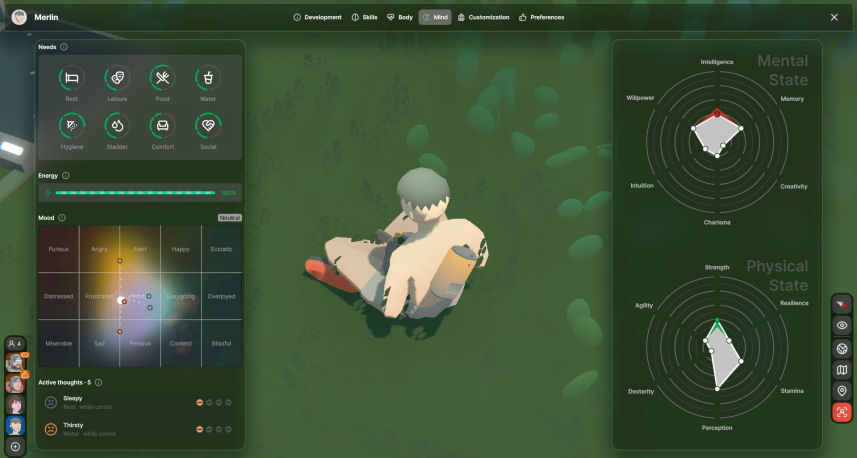
A cluster of fixes addresses the same failure: a Seedling that knows what to do, starts doing it, and then gets stuck between need, energy and activity rules.
Seedlings with energy just above the exhaustion floor will check the projected cost before starting a long construction, harvest or production job, instead of beginning and aborting it repeatedly. Hauling and delivery tasks saved to Save for Later will stop becoming unusable moments after being saved. Items reserved for an interrupted activity will release themselves instead of reading “Reserved” for hours. Shared-living invitations will stop sticking when one participant dies or migrates. Seedlings will regain access to upper floors in the multi-storey buildings where every activity had begun to fail.
Our favourite is the water loop: a Seedling next to a pump in a loud room would pick up water, be interrupted, and repeat indefinitely without ever drinking. Loud rooms will no longer abort drinking, and Clean Water will stop restoring the sliver of energy that kept luring Seedlings back for another pointless sip. Somebody found that, understood it and fixed both halves, and that is a good sign about how this game is being maintained.
Seedlings will keep up to 100 relationships, automatically forgetting whoever they interacted with least recently. Familial and other important relationships are protected from that pruning, which is the part that matters — trimming a forgotten acquaintance is housekeeping, while deleting a family bond because somebody slipped to position 101 would be social amnesia with a spreadsheet attached.
A Seedling already in a romantic relationship will no longer start romantic actions with somebody else on its own initiative. You can still instruct them to, which keeps the choice with the player and stops the simulation quietly setting fire to its own relationships. The Pollen Pill becomes directly usable from the Cultivator Inventory, and a baby can be renamed at any point before it grows up — a grace period between “that seemed fine at the time” and explaining it at every family gathering thereafter.
Subway stations will only be placeable or movable within 300 metres of the nearest station in the same network, with a network's first station exempt, and the Land Planner will disable Confirm and explain why.
That is a rhythm rule rather than a restriction. A network now has to grow outwards through connected placements instead of teleporting a station to whichever corner of the map is convenient. Buildings that host no actual service will also stop appearing as service locations on the map, which is one less way to plan a journey around something that was never there.
0.3.3 does not read like a content patch. It reads like a studio that spent a fortnight following players around Avesta and writing down every moment the game answered a reasonable question with silence, stale data or the wrong menu.
The voting cap is the headline and deserves to be. It is an admission that a design principle — one Seedling, one vote — collided with an exploit, and a willingness to put an interim fix in place while the better answer is built. We would rather read that than a studio pretending the problem was theoretical.
The quieter work may matter more. Named missing resources, projected energy checks, honest warning icons and market records that actually record are not features anyone will screenshot. They are the difference between a society simulator that is difficult because societies are difficult, and one that is difficult because a button will not say what it wants.
On paper it points in the right direction. Whether the live build earns that is tomorrow's question, and one nobody can answer today.












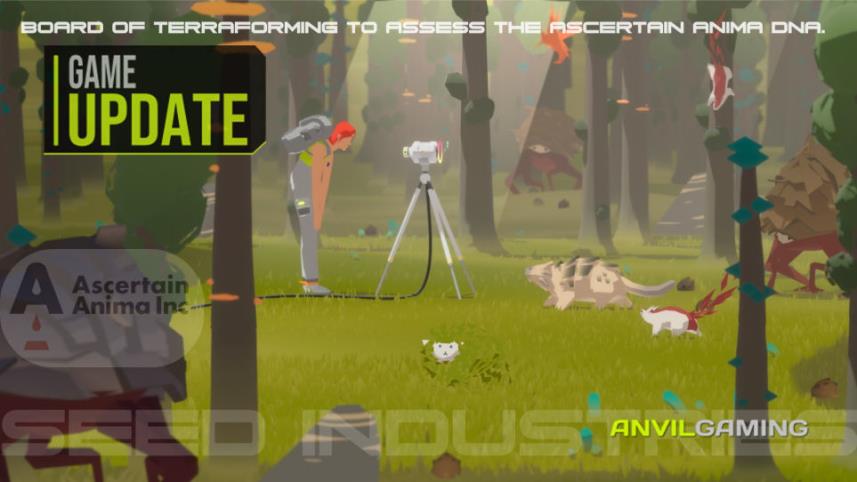
SEED's Dezima Donations event is coming to an end, but the story surrounding it may be far from finished. Spark posts have revealed an Axiom attack, a laboratory breach and DNA reaching Avesta's surface. Now, with a suspicious image showing animals and an unexpected reward teased, we investigate whether Klang has been quietly preparing the planet for new life.
Read More
Klang named its own broken system in public and came back three days later having fixed it four separate ways. The fix list is long enough to finally itemise what trade was costing people. The drone rebalance is the bill, and it charges only those who tidy up.
Read More
Klang says SEED market failures have fallen from roughly 20% to 4%, but that is not an all-clear. Buyers need free inbox space and scheduled haulers, while responsibility for a lost shipment can change at the Spaceport. Here is who carries the risk now.
Read More
SEED 0.3.4 takes rare ore out of repairs, teaches schedules to explain their failures and stops trees growing back. It also rebalances storage - and because the new capacities only apply to containers you move, tidying up is now the most expensive thing you can do.
Read More
Mundi hosted the Covital Show on SEED's official channel and put the roadmap on screen. 0.4 is City Life - law and order, electricity, organisations, building subdivision, bars. And the board says we are nowhere near the end of it.
Read More
SEED 0.3.2 wraps a summer event around depleting ore, a single-item hierarchy, stronger governance, and a safer market. Our analysis of Klang's official notes and what each change will cost your society.
Read More
Your Seedling isn't lazy - it's following orders. Every event in SEED's Scheduler has its own priority list, and anything past the top few is wallpaper. How events work, why needs deserve their own hour, when a direct order beats the schedule, and a week you can copy.
Read More
A SEED hospital can have a skilled doctor, medicine on hand, and opening hours, yet still collect one-star 'wasted visit' reviews. This guide turns seven weeks of community troubleshooting into one current setup for services, staffing, stock access, and patient schedules.
Read More
Every crafting task in SEED shows three times, and most players read the wrong one. Total Time only says when the output appears - Work Time is what the job actually costs your settlement. Read them that way and the obvious recipe is often the expensive one.
Read More
Health in SEED is not a bar you refill. It is a system of specific conditions, severity tiers and sixteen medical specialisms — and the serious end of it depends on other people.
Read More
What a Seedling does while you are away in SEED — what keeps running, what it decides for itself, what degrades and how fast, and how to end a session so you come back to a life rather than a mess.
Read More
SEED puts you in charge of people who make their own decisions, on a planet that keeps running whether or not you are logged in. One real hour is one day on Avesta. Here is what that actually means to play, what Early Access still gets wrong, and who should not buy it.
Read More
Wyrmhold does not run open recruitment. We take people for a need, after a conversation. This is what the Hold expects of a resident, what it provides in return, who it is honestly not for, and where to come and talk to us.
Read More
Wyrmhold is our society on Avesta. Its founding stories are not decoration - each one encodes a SEED system that will decide whether your own society survives. Here are three of them, and what they are really about.
Read More
The first record of what Wyrmhold actually did. One month, almost no visible expansion, and a great deal of infrastructure - the survey, the Kernel, the Dragonforge Ward workshops, the Elderwyrm department, an election, and the Hold's first registered business.
Read More