
GAMING
Loading





Mark 31 October. That's the day Klang expects SEED's first Seedlings to die of old age.
It came near the end of Episode 3 of The Notice Board, Klang's weekly community show with Andy, its community manager, and JJ, its publishing lead, on Wednesday 7 October. Seedlings live to 120 at most, the hosts said, and the first batch gets there on Halloween. That's three weeks' notice, and it's the most useful thing Klang's said on this show yet.
The rest, quickly. The new shelves are still on their way, and Klang's now calling them what they are: warehouse shelves. Storage caught up with everyone in 0.3.8 without anyone losing a thing. Instead of a delete button, an engineer let the hosts tease a waste compactor. Every question about ore got "wait for the blog", and the blog turned up two days later. And Klang said, plainly, that Seed Industries isn't meant to be the market forever.
Three episodes into keeping score, the bug list still hasn't come back, and the griefing write-up still hasn't been published. Plenty else has moved, though, and the tracker's below.
This write-up is based on the Episode 3 broadcast of 7 October 2026, checked against Klang's 0.3.8 notes, its 9 October resources blog, SEED's game data and our coverage of Episodes 1 and 2. Klang's plans are reported as Klang gave them. The arithmetic, the grading and the opinions are ours. Nothing here is a hands-on test.
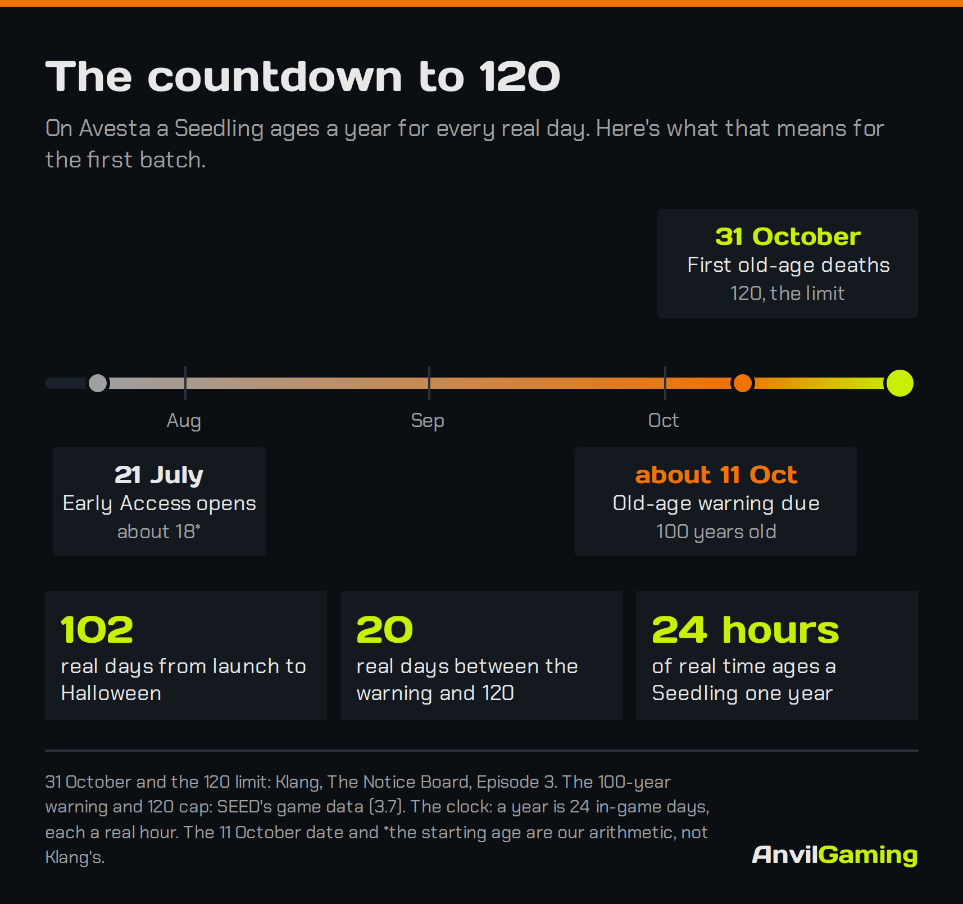
A viewer asked whether every Seedling dies at 120. For now, yes. 120 is the hard limit: look after a Seedling well, meet its needs, and that's how long it lives. Klang wouldn't promise it stays that way. In future it's more likely to be balanced so Seedlings sometimes die of natural causes a bit before then, the way an older immune system weakens or an injury gets likelier.
Then the date. The first batch will die of old age on 31 October, which the hosts called "quite an appropriate time". Their advice to societies was to start planning now, talk it through on Discord, and watch for more information from Klang soon.
The date checks out against SEED's clock. A year on Avesta is 24 in-game days, as our log-off guide explains, and each in-game day lasts a real hour. So a Seedling ages a year for every real day. Klang's own Covital Show looked back on "the last 72 years on Avesta" on 2 October, 73 days after launch, so the clock holds. Halloween is 102 real days after Early Access opened on 21 July, which means a Seedling made on launch day as a young adult of about 18 reaches 120 right on cue. The 18 is my inference from the date. SEED's data says new Seedlings start as young adults; Klang hasn't published an age.
There's one more number in the game data that's worth knowing today. SEED sets an upcoming-death notification at 100 years old. On the same clock, that's 20 real days before 120. So if one of your Seedlings is in the Halloween batch, its warning should have landed around 11 October. That's our arithmetic from the data, not something Klang has described, so treat the date as a guide rather than a promise.
Old age is the only death in SEED that comes with a date. Use the three weeks.
What Klang hasn't said is what happens to an office when the person holding it dies of old age. If your society's leader or treasurer is in the first batch, settle who's next while they're still around to help.
On Episode 1's community list, graveyards and memorials for dead Seedlings sat in our "far off" band. They're about to feel a lot nearer.
Episode 2 ended on a question: would the new shelf beat the storage deadline? It didn't. Klang's 0.3.8 notes, out on 5 October, moved every container and delivery drone to its new capacity, with no new shelf in sight.
The good news is in how it was done. Nothing was lost. A container over its new limit keeps everything and simply won't take more until it's back under, and a drone carrying too much finishes the haul it's on. On the show, the hosts explained the month's delay: it was there to give societies time to move into the new buildings once their material costs came down. That's a rebalance finished properly.
The shelves themselves are on their way. Andy said again that he drove them through personally, and offered himself up for the blame if anything goes wrong. He also set expectations, which I appreciate more than a render. They're an alternative to pallet-based storage; they're "not going to be the prettiest solution in the world", and they're warehouse shelves. Something nicer may follow one day. For now, think racking.
One tip from the same segment will save someone an afternoon. Some players found that a Seedling sent to a new Schedule Zone harvested everything and then left the goods lying on the ground. That's because there was no storage container nearby. PAM's information on zones was out of date and is being updated, but the rule is already in Klang's notes: hauling stays between containers inside the zone. Draw the zone around a box, and the harvest has somewhere to go.
SEED's most-requested button is probably "delete", and Klang still doesn't want to give you one.
What it gave instead was a tease. Fito, one of Klang's engineers, had given the hosts permission to mention that the studio is looking into a feature called a waste compactor: a way to do something with old goods you don't need anymore. It isn't agreed yet, and the advocates haven't seen it. The thinking behind it is clear, though. Rather than letting you delete things, Klang wants to give unwanted items a use, ideally one that helps your society grow. One of the hosts admitted they'd delete things by mistake if the button existed, which is the most honest argument against it I've heard.
There was a warning attached, too. If a feature turns up that converts one thing into another, and you feed all your ore into it, "I will hear no complaints" when you run out. Fair.
This has been creeping forward all month. Episode 1 had trash and waste handling "in active development". Episode 2 had salvage "in process". Episode 3 gave it a name.
The same thinking came up around food. Players keep asking for a "do not eat" button, because Seedlings eat the raw mushrooms a society needs for ethanol, even over cooked food. Klang said it's come up many times, murky water too, and it's looking at a few solutions; one idea floated was letting you pick what's allowed to be eaten. The ethanol recipe itself has been escalated to the design team, and the suggestion on the table is corn, which Seedlings don't eat raw. A hospital owner in chat pointed out that mushroom indigestion has been good for business. Every crisis is somebody's revenue stream.
And if your storage keeps filling with biomass as things decay, Klang's heard that, and said biomass may get more uses in the future.

Ore came up again, and this time the answer was "please wait": one of Klang's designers was finishing a blog due that week. It went up on Friday, 9 October, as Dev Blog - An Update on Resources, and it's a proper one.
Everything in it is planned for 0.3.9. None of it is live yet.
That answers three things from the show. The week's top suggestion asked for the scanner's 30-second cooldown to be cut. The blog doesn't touch the cooldown, but a filter should mean fewer wasted scans. A question from the form asked why a tile at 30 abundance gave more ore than one at 50; the hosts said it didn't sound intended and asked for a ticket, and the new tooltip is Klang's answer to exactly that kind of confusion. And Episode 2's rare-ore answer - the advocates are pushing, no guarantees - now has a plan behind it.
There's a callback for our own readers, too. Klang's 7 September resources blog planned Debris and Ore Rubble for 0.3.6, and our 0.3.7 analysis noted that neither had arrived. Debris is now down for 0.3.9, a month later and with Scrap Metal attached. Ore Rubble isn't mentioned at all. Coal and copper stay a "mild bottleneck" on purpose, so mining can't be fully automated, and Scrap Metal output starts deliberately low, so the market isn't flooded, and will be adjusted.
The blog's last line is one for society leaders: feedback on the Harberger Tax is among the things Klang's already investigating.
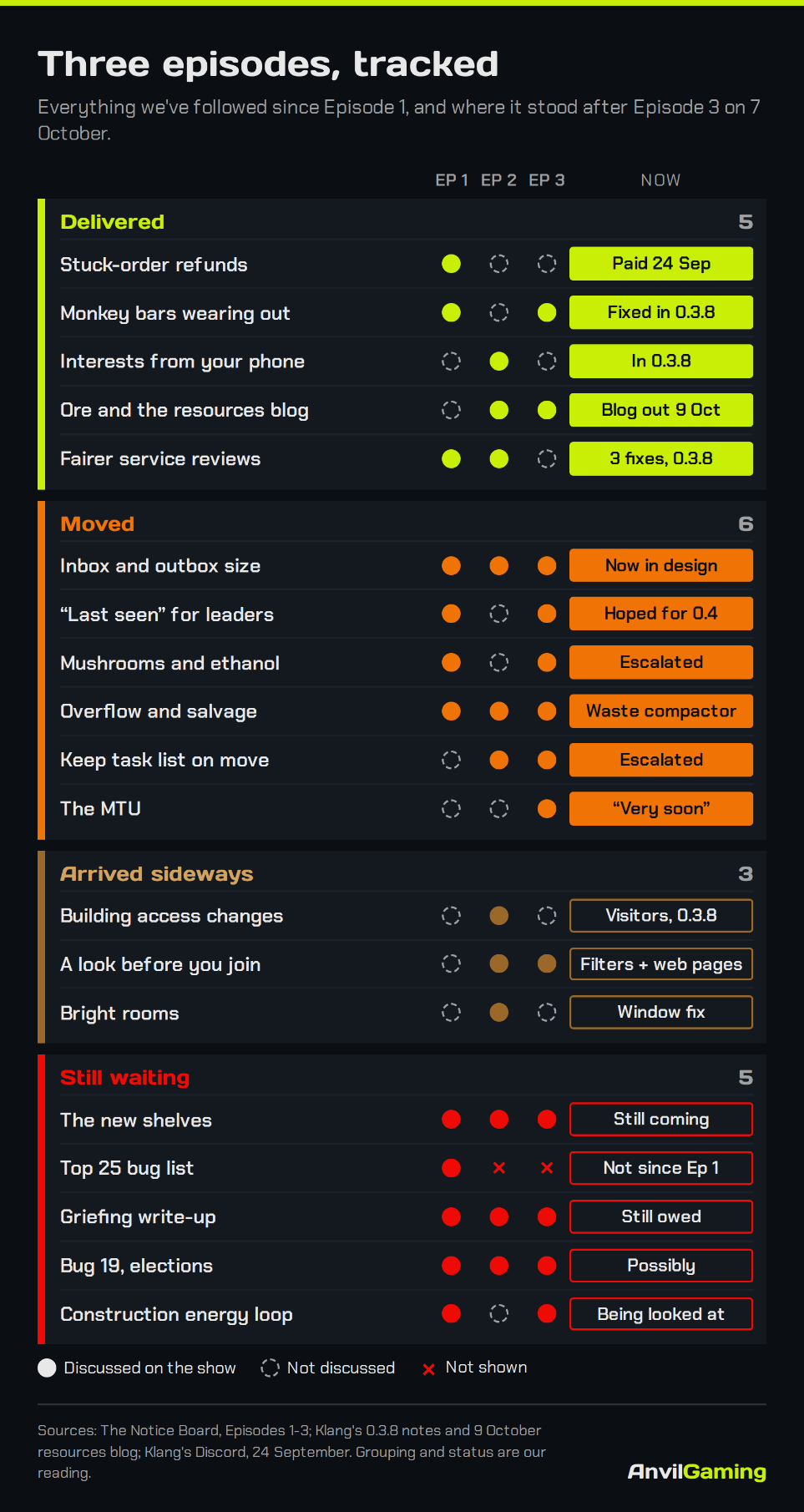
We've kept score since Episode 1. Here's where everything stands after three episodes and two patches.
Delivered
Moved
Arrived from a different direction
Still waiting
That's five delivered, six moved and three arriving sideways, against five still waiting. For a studio not yet three months into Early Access, that's a decent ratio. The two that matter most are still in the last group.

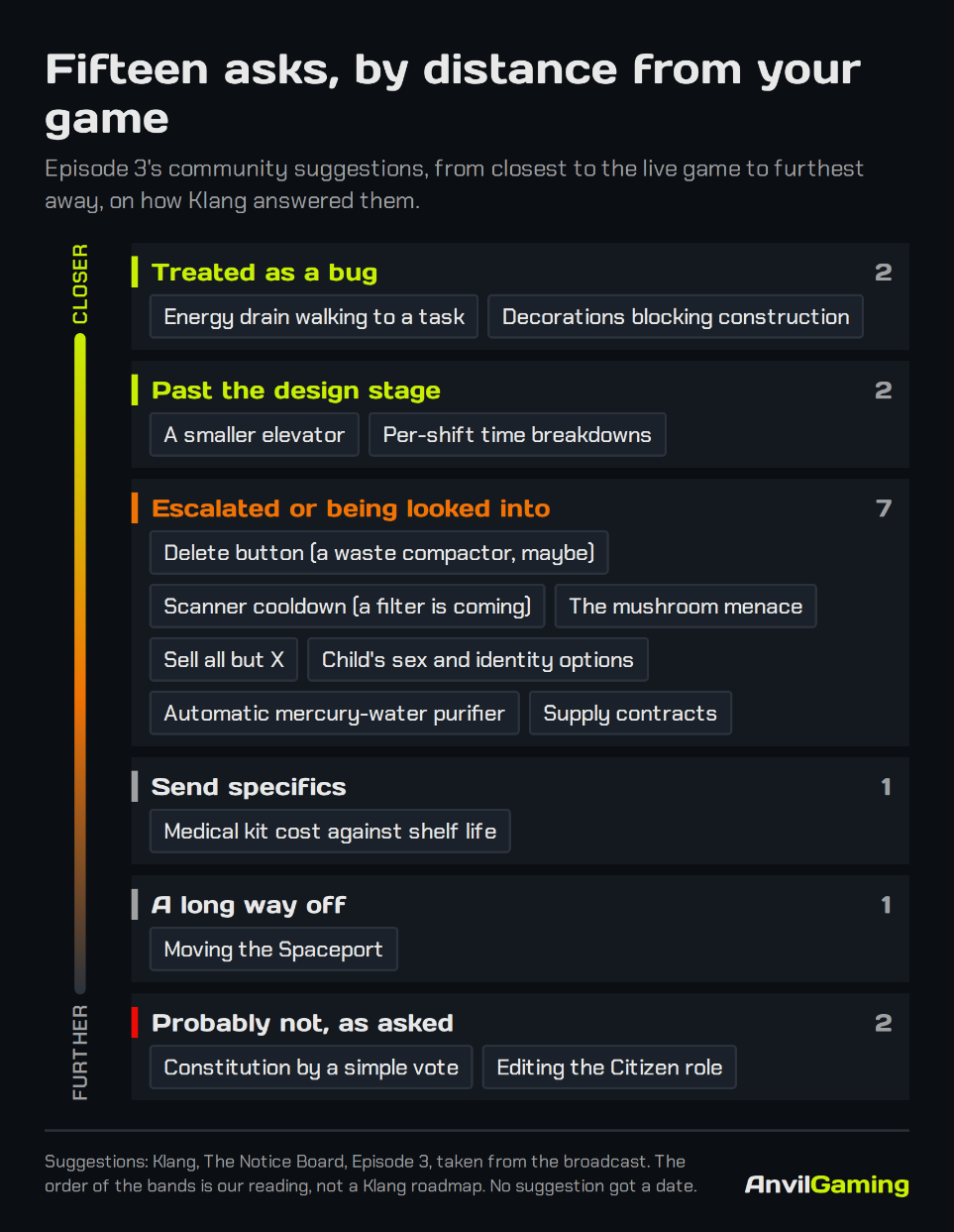
This week's fifteen came from the suggestions channel, the last seven days only, as before. Klang's advice on suggestions is worth repeating, because it's the one part you control: be specific.
"Change the whole medical system" is years of work. "The scalpel's too expensive" can be fixed quickly. The monkey bars are the proof.
As always, the grading is our reading of how firmly each one was answered, not a roadmap.
Treated as a bug
Being worked on, past the design stage
Escalated, or being looked into
Send specifics
A long way off
Probably not, as asked
The most important answer of the night came from the question form, and it was about money.
Someone asked why Seed Industries' buy orders haven't been nerfed. Klang's answer: SEED's goal is to be a societal simulation; Seed Industries isn't the intended long-term strategy for the market, and the design intention is to move away from it slowly. It'll change when Klang feels the market is balanced and in a fair state for it. The hosts also noted that they "get screamed at a lot every time the word nerf comes up", which is true of every game ever made.
That matters more than it sounds. As we read it, Seed Industries' buy orders are how new SeedCoin enters SEED: it buys a set list of goods at deliberately poor prices, and in a closed player economy that's the mint. Move away from it, and new money has to come from somewhere else. Klang didn't say where. A question about weekly, changing Seed Industries prices was escalated, with no answer yet.
So my advice is the boring kind. If your society lives off selling to Seed Industries, start building player customers now, while it's still your choice.
Before the show got going, the hosts apologised. To run a poll on last week's stream, Klang switched on a Twitch feature that brought adverts with it - a genuine mistake, they said. The streams aren't meant to make money; Klang's asked Twitch to remove the ads, and anyone who subscribed just to get rid of them will get some Pollen or in-game items. A studio compensating you for its own adverts is a first for me.
At the end came a preview: a Societies section on seed.game, launching the next day. Each society gets a page with its description, an overview, its wealth, a message from the society if it's posted one, and trends and stats for population, total wealth, well-being and its economy, down to what it produces and consumes most and how its wealth is spread. Klang wants it open to everyone, so you can look up your nearest rivals. The chat immediately asked why it had bothered planting spies.
Episode 3 was the least showy of the three and the most useful. It put a date on the first old-age deaths with three weeks' notice. It set honest expectations for the shelves, explained the zone problem in a sentence, and said something genuinely important about where SEED's money comes from. Then it promised a blog and delivered it two days later. That's a studio getting better at telling its players things, and I'm glad to see it.
Two things from Episode 1 are still outstanding: the Top 25 coming back, so we can all see which of SEED's worst bugs are gone, and the write-up on griefing Klang said it would publish. Neither needs a patch.
Episode 4 is due Wednesday 14 October. Before then, check your oldest Seedlings, train someone up, and get the paperwork in order.



















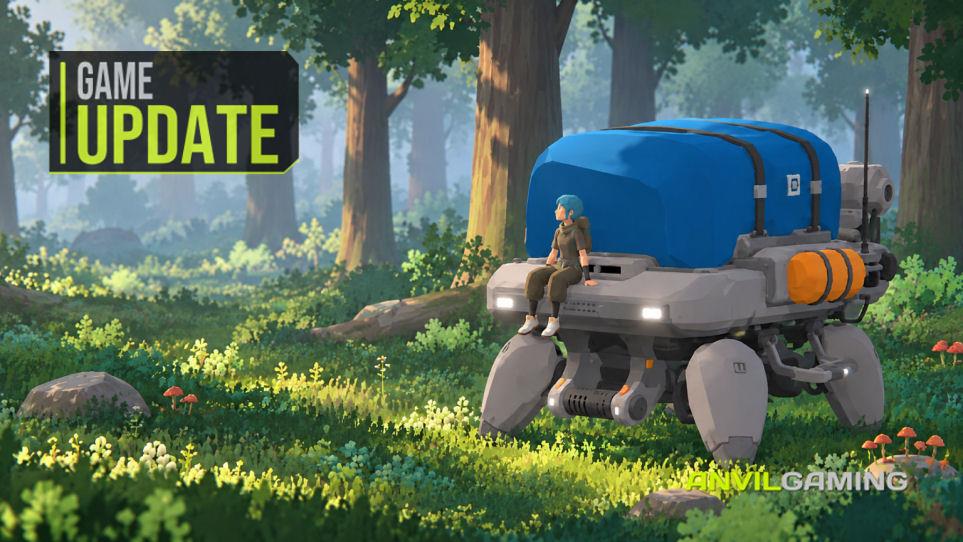
The MTU wants 915 Passivated Steel Sheets before it goes anywhere. We'd check our old mines first: SEED 0.3.9 promises extra cycles even on depleted tiles. Then come filtered scans, scrap recycling, and four society policies with bills worth reading carefully.
Read More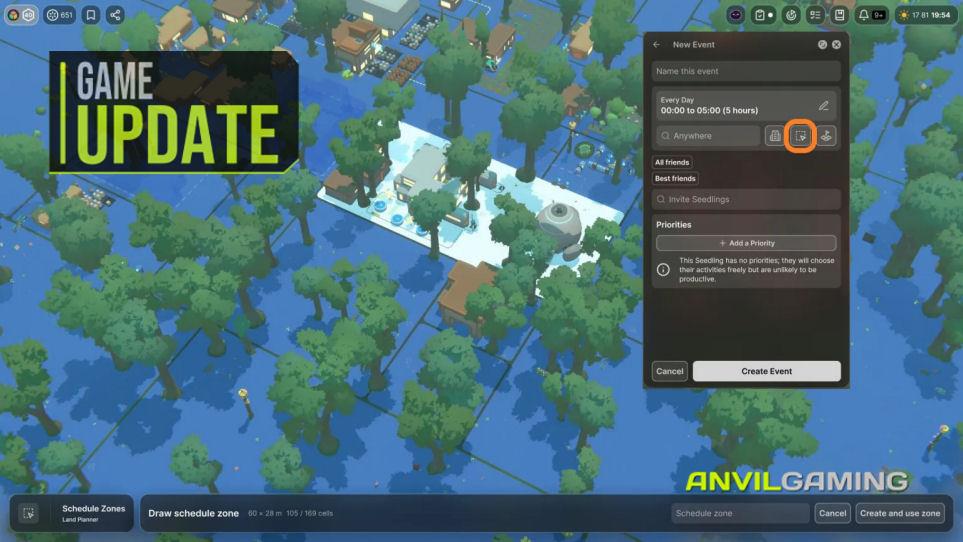
SEED 0.3.8 lets you draw a zone and send a Seedling to clear it, ends the storage grace period without losing anyone's goods, and lets you choose who inherits when a Seedling dies. We checked it against Klang's own top five problems. Four got real work. The fifth got Monkey Bars.
Read More
Klang's One World show was a party: island dance crews, a live poll, a PAM cameo. Between numbers, an engineer explained why drones get stuck, how a 520-shelf plot can make an island lag, and how close the MTU is. Our take: give your Seedlings a road and your duck a corridor.
Read More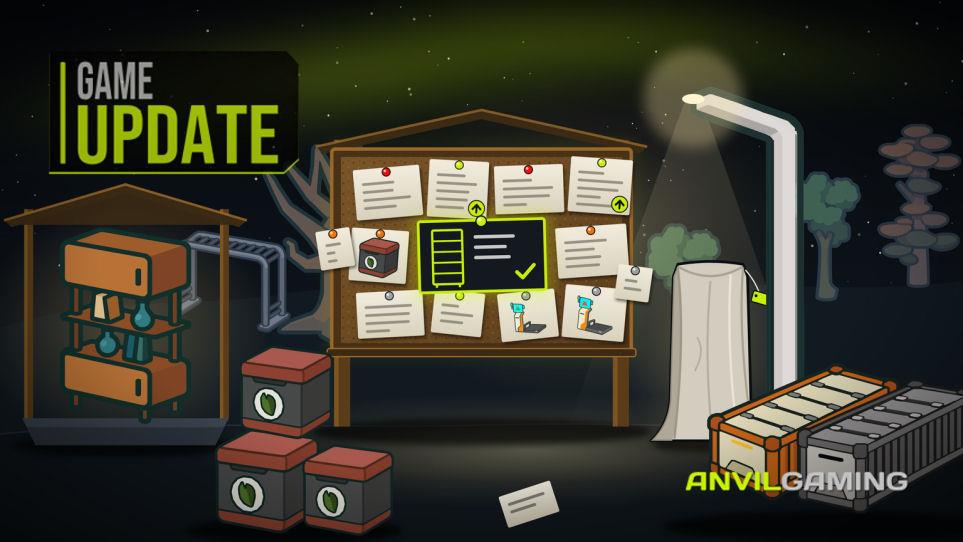
Last week storage topped SEED's wish list. This week Klang put a shelf on screen, art done and code under way, expected within a fortnight. Our one-week scorecard: the refunds landed, the bug list didn't come back, and the griefing response is still owed. Plus the herds and 0.4.
Read More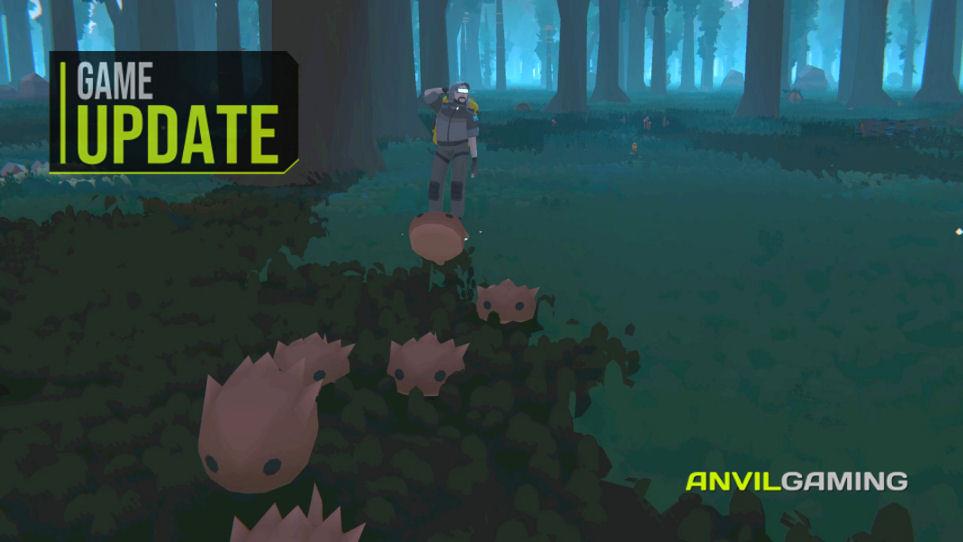
SEED 0.3.7 puts wild Anima Herds on Avesta, and Klang's own lore traces them to the Dezima breach the donation event was built around. Returning players also get two real hours to answer a Seedling instead of ten minutes, and big trees can finally leave big seeds.
Read More
Klang's new Wednesday show opened with SEED's 25 worst bugs, ranked and explained how the ranking is made. By our count, market faults carry two-fifths of the pain, while storage dominates what players ask for. What was promised, what was not, and how to push a bug up.
Read More
Your Seedling isn't lazy - it's following orders. Every event in SEED's Scheduler has its own priority list, and anything past the top few is wallpaper. How events work, why needs deserve their own hour, when a direct order beats the schedule, and a week you can copy.
Read More
A SEED hospital can have a skilled doctor, medicine on hand, and opening hours, yet still collect one-star 'wasted visit' reviews. This guide turns seven weeks of community troubleshooting into one current setup for services, staffing, stock access, and patient schedules.
Read More
Every crafting task in SEED shows three times, and most players read the wrong one. Total Time only says when the output appears - Work Time is what the job actually costs your settlement. Read them that way and the obvious recipe is often the expensive one.
Read More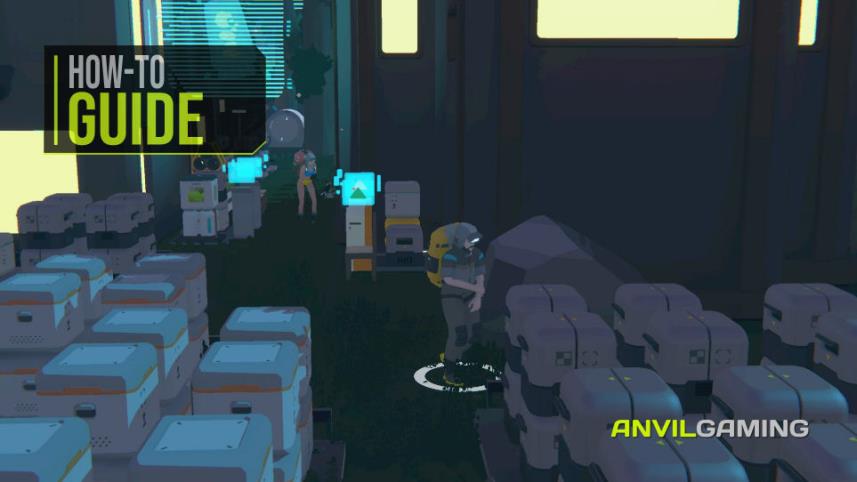
Health in SEED is not a bar you refill. It is a system of specific conditions, severity tiers and sixteen medical specialisms — and the serious end of it depends on other people.
Read More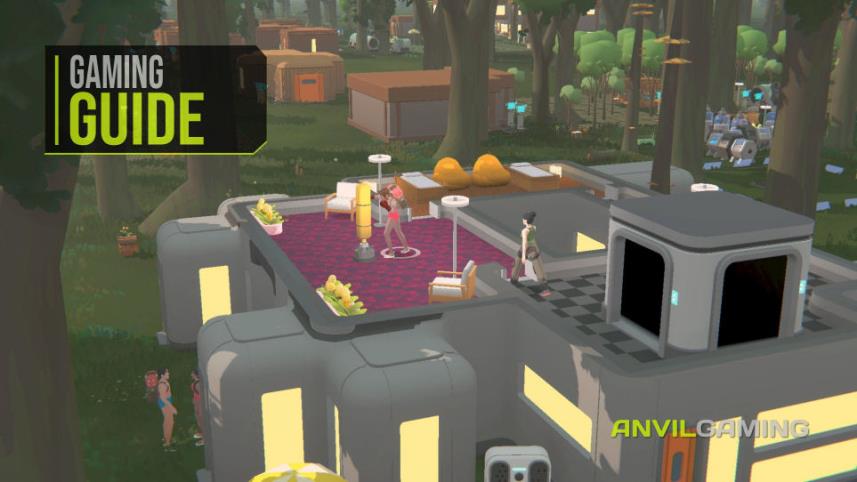
What a Seedling does while you are away in SEED — what keeps running, what it decides for itself, what degrades and how fast, and how to end a session so you come back to a life rather than a mess.
Read More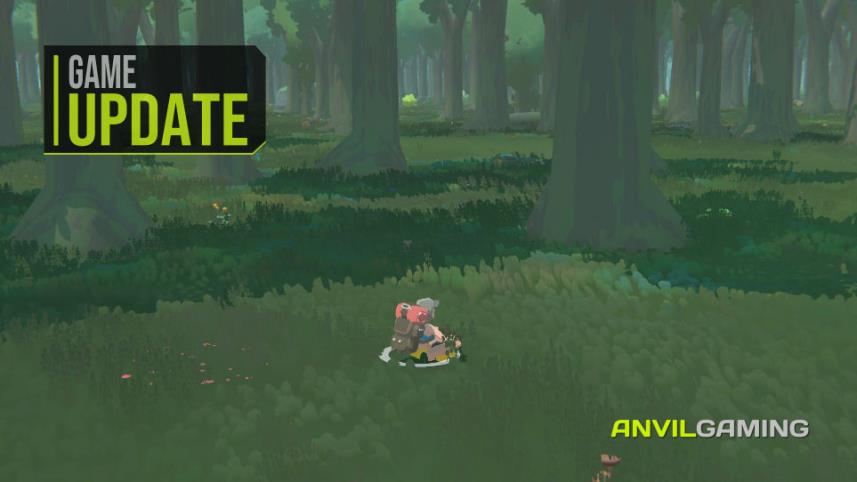
SEED puts you in charge of people who make their own decisions, on a planet that keeps running whether or not you are logged in. One real hour is one day on Avesta. Here is what that actually means to play, what Early Access still gets wrong, and who should not buy it.
Read More
Wyrmhold does not run open recruitment. We take people for a need, after a conversation. This is what the Hold expects of a resident, what it provides in return, who it is honestly not for, and where to come and talk to us.
Read More
Wyrmhold is our society on Avesta. Its founding stories are not decoration - each one encodes a SEED system that will decide whether your own society survives. Here are three of them, and what they are really about.
Read More
The first record of what Wyrmhold actually did. One month, almost no visible expansion, and a great deal of infrastructure - the survey, the Kernel, the Dragonforge Ward workshops, the Elderwyrm department, an election, and the Hold's first registered business.
Read More