
GAMING
Loading





How we know this: DC and I both watched the Covital Show live on SEED's official channel on 4 September 2026, hosted by Mundi, and took notes independently. There is no transcript. Nothing below is a quotation, and nothing is attributed to anyone as a statement - this is what two people came away with, cross-checked against each other. Where our notes disagree, we have said so rather than picking whichever version sounded better.
Right. With that out of the way.
We have spent a month building Wyrmhold. Surveying ground, putting up a thousand square metres of workshop, arguing about departments. And the thing that has been quietly nagging at both of us the whole time was a suspicion that we were building on the ground floor of something much taller.
Then Mundi put the roadmap on screen.
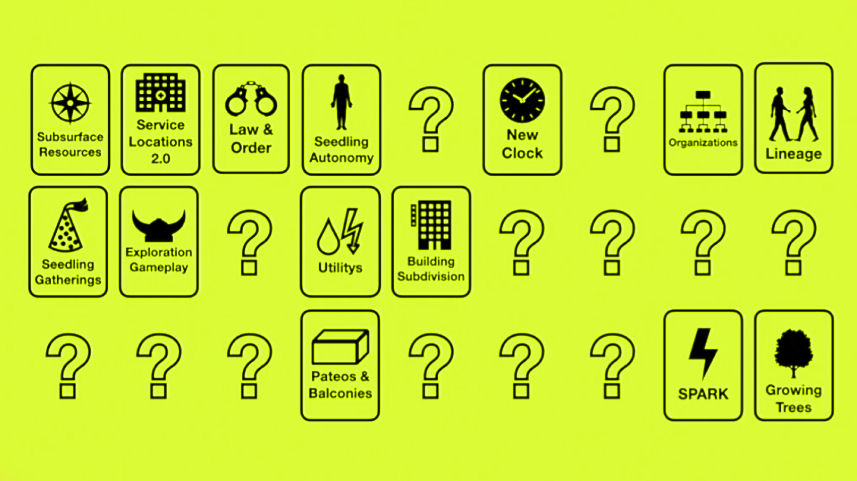
Twenty-seven tiles.
Fourteen of them have names on. Thirteen are still question marks.
Sit with that for a second. Everything below - law and order, electricity, organisations, subdivided buildings, bars, aging, autonomous Seedlings - is the half they were willing to show. There is an entire second half of that board nobody outside the studio has seen.
The game we are playing right now is not a small game. It is a shell around a much larger one, and the roadmap makes no attempt to pretend otherwise.
Two tiles on that board are worth flagging because neither of us caught them being discussed in any detail: Subsurface Resources and Exploration Gameplay. They are named, they are on the board, and they went past. If you want to know what we are most curious about, it is those two.
The near-term items came first, and several of them quietly fix things that have been grinding on people.
Here is where it stops being a list of features and starts being a different game.
Crime is coming, and societies decide their own. Arson and graffiti both came up.
Think about what that actually means for a society. Right now the worst a bad actor can do is take more than their share. After 0.4, a society needs to have decided in advance what counts as a crime, who judges it, and what happens next - before somebody sets fire to something.
Electricity. Machines, drones and lights will need it. Fuel becomes a requirement for cooking. Generators consume physical resources, solar panels are in the works, and a power grid connects buildings via poles.
This is the biggest single change on the board and it is not close.
Businesses, groups, departments and societies all become one thing with different settings, rather than separate systems with fixed presets. A new browser window for them. Roles inside organisations - managers, promotions, employees of societies. Far finer control over permissions. More voting controls. A blueprint-like system for setting an organisation up.
The line that made both of us sit up: current government types are templates, and this is the foundation for societies writing their own constitutions.
For anyone who has read our founding lore, you will understand why we made a noise at that.
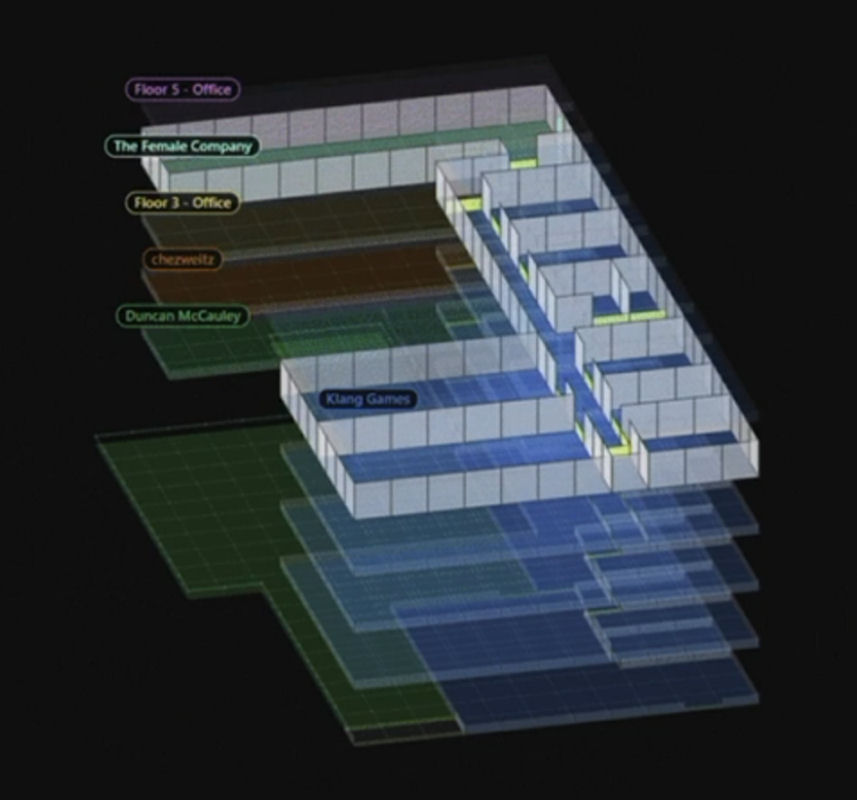
Buildings split into floors, and floors into rooms, with different zones doing different things - and units rentable separately. The screen showed a single structure sliced into five labelled floors with different owners on each.
A society stops being a collection of buildings and becomes a place with landlords, tenants and neighbours.
Bars and restaurants arrive as service locations. Gatherings can be scheduled through Spark and the scheduler, with Seedlings behaving according to the event description, held in selected zones, and invitations extendable to whole groups rather than individuals - parties, funerals, protests. That one came from a community suggestion.
Patios and balconies, plus roof access.
Seedling autonomy: More of the game shifting toward Seedlings acting on their own judgement rather than yours. Both of us wrote this down with a question mark, because the implications are enormous and the detail was thin.
Lineage: Aging becomes visible - greying hair, wrinkles. Your Seedlings will start to look like they have been here a while.
Growing trees: Trees escape the farming plot and become something you can plant anywhere. DC noted the timing as genuinely uncertain.
A new clock: showing real-world and SEED time together, which is the least glamorous item on the board and the one that will improve daily play most.
Spark on the web.

Here is the read neither of us had until we put the notes side by side.
Water regenerates. Rares stop gating repairs. Resource nodes get richer. Buildings stop needing rare materials. Every one of those reduces pressure on raw materials.
And then utilities arrive. Electricity for machines, drones and lights. Fuel for cooking. Generators that eat resources to produce power.
0.4 does not remove scarcity. It moves it. The pressure comes off the ground and goes onto the grid.
If your society has spent its first months optimising around hoarding minerals, that skill is about to matter less than the ability to keep the lights on. That is not a small adjustment - it is a different competence.
Two people watched the same stream and came away with different versions of several things. We would rather print that than pretend to a certainty neither of us has.
None of this has shipped. All of it is forward-looking, some of it carried no version number at all, and roadmaps move - that is what roadmaps are for.
We have no build to test, no hands-on, and no timeline beyond what was said on the night. When these land we will tell you how they actually play, and if something on this list quietly disappears, we will tell you that too.
But we are not going to be cool about it either. We came into this month wondering whether we were early to something or just early. Twenty-seven tiles, thirteen of them still hidden, and 0.4 rewriting what a society has to be good at.
We are building on the ground floor. Good.








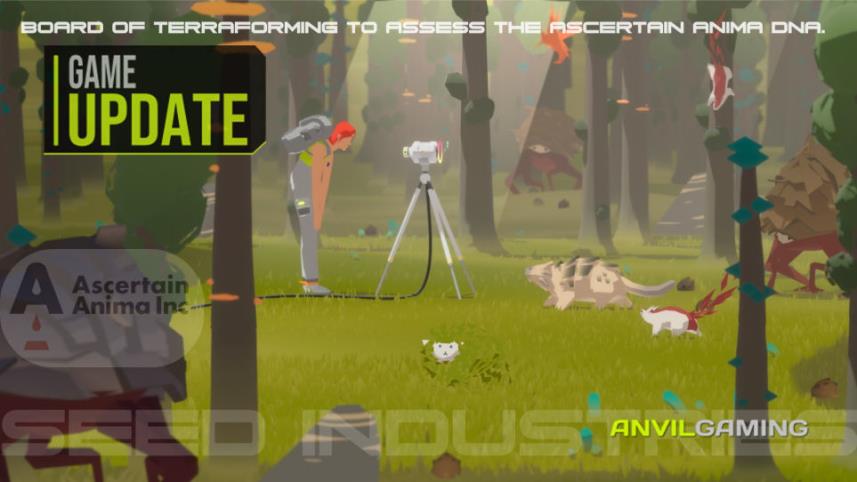
SEED's Dezima Donations event is coming to an end, but the story surrounding it may be far from finished. Spark posts have revealed an Axiom attack, a laboratory breach and DNA reaching Avesta's surface. Now, with a suspicious image showing animals and an unexpected reward teased, we investigate whether Klang has been quietly preparing the planet for new life.
Read More
Klang named its own broken system in public and came back three days later having fixed it four separate ways. The fix list is long enough to finally itemise what trade was costing people. The drone rebalance is the bill, and it charges only those who tidy up.
Read More
Klang says SEED market failures have fallen from roughly 20% to 4%, but that is not an all-clear. Buyers need free inbox space and scheduled haulers, while responsibility for a lost shipment can change at the Spaceport. Here is who carries the risk now.
Read More
SEED 0.3.4 takes rare ore out of repairs, teaches schedules to explain their failures and stops trees growing back. It also rebalances storage - and because the new capacities only apply to containers you move, tidying up is now the most expensive thing you can do.
Read More
SEED 0.3.3 caps a single Cultivator's votes at 15% of the society population, puts a price on firing a Seedling, and spends the rest of a very long changelog teaching the game to explain its own failures.
Read More
SEED 0.3.2 wraps a summer event around depleting ore, a single-item hierarchy, stronger governance, and a safer market. Our analysis of Klang's official notes and what each change will cost your society.
Read More
Your Seedling isn't lazy - it's following orders. Every event in SEED's Scheduler has its own priority list, and anything past the top few is wallpaper. How events work, why needs deserve their own hour, when a direct order beats the schedule, and a week you can copy.
Read More
A SEED hospital can have a skilled doctor, medicine on hand, and opening hours, yet still collect one-star 'wasted visit' reviews. This guide turns seven weeks of community troubleshooting into one current setup for services, staffing, stock access, and patient schedules.
Read More
Every crafting task in SEED shows three times, and most players read the wrong one. Total Time only says when the output appears - Work Time is what the job actually costs your settlement. Read them that way and the obvious recipe is often the expensive one.
Read More
Health in SEED is not a bar you refill. It is a system of specific conditions, severity tiers and sixteen medical specialisms — and the serious end of it depends on other people.
Read More
What a Seedling does while you are away in SEED — what keeps running, what it decides for itself, what degrades and how fast, and how to end a session so you come back to a life rather than a mess.
Read More
SEED puts you in charge of people who make their own decisions, on a planet that keeps running whether or not you are logged in. One real hour is one day on Avesta. Here is what that actually means to play, what Early Access still gets wrong, and who should not buy it.
Read More
Wyrmhold does not run open recruitment. We take people for a need, after a conversation. This is what the Hold expects of a resident, what it provides in return, who it is honestly not for, and where to come and talk to us.
Read More
Wyrmhold is our society on Avesta. Its founding stories are not decoration - each one encodes a SEED system that will decide whether your own society survives. Here are three of them, and what they are really about.
Read More
The first record of what Wyrmhold actually did. One month, almost no visible expansion, and a great deal of infrastructure - the survey, the Kernel, the Dragonforge Ward workshops, the Elderwyrm department, an election, and the Hold's first registered business.
Read More