
GAMING
Loading





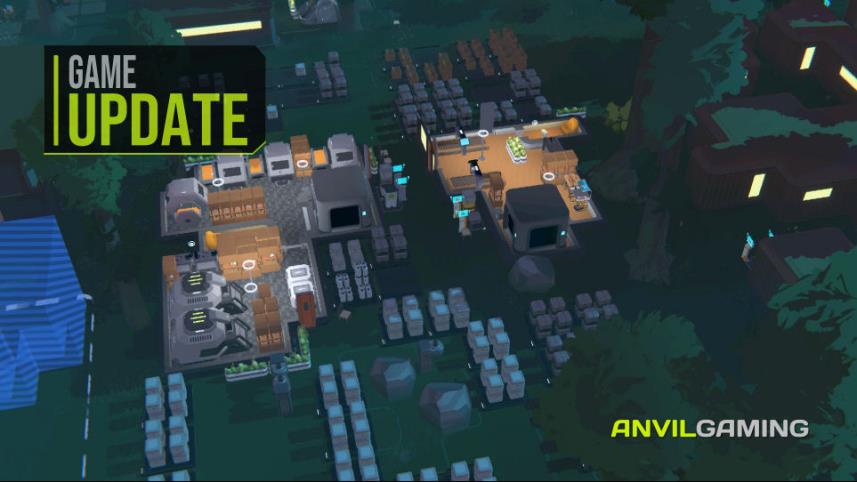
SEED 0.3.4 spends most of its length taking traps away. Repair recipes no longer contain rare ore at all. Furniture recipes use roughly 80% less of it. The duplicate bandage schematic that did nothing is gone. Schedules that fail now say why they failed, in words, on the block. Items from a cancelled placement come straight back instead of sitting reserved for seven hours.
Then there is the storage rebalance, which works the other way, and which has a trap in it that no line in the notes points at.
Containers that grew just grow. A Large Storage Platform still on 1,800 becomes 2,730, and a Frontiers Expedition Container becomes 1,630, without you lifting a finger. The same snap applies to delivery drones placed before 0.3.5's drone rebalance, which drop from 1,000 per haul to 250.
Containers that shrank overflow. If a container holds more than its new capacity, it accepts nothing new until the extra stock is emptied out. That Fancy Storage Shelf quietly holding 500 wakes up on patch day with a limit of 70, 430 over it and refusing everything.
"Do not move your storage" was the right advice for the grace period. After 0.3.7 an old shelf is just a shelf, so the reorganisation this article told you to put off is now the job to do before the patch:
This is the right call. Two capacities for the same shelf, depending on when you happened to place it, was never a fair game, and Klang says fairness for all players is exactly why it is doing this. Our complaint below was that nothing warned you. Now something has, with a date attached. Use the time.

Storage capacities have been rebalanced against physical footprint. A Large Storage Platform goes from 1,800 to 2,730. A Fancy Storage Shelf goes from 500 to 70.
Here is the part that matters: the new numbers apply to new, moved, and unpacked containers. Containers already placed keep what they have.
So the shelf in your workshop still holds 500. Pick it up to move it two tiles left, and it holds 70. Same object, same tile, seven times less. Nothing warns you, and there is no undo.
If you have been putting off a settlement reorganisation, that hesitation just paid for itself.
The dev blog is unusually blunt about the problem: "Building more shelves was often better than using the platforms designed for bulk storage."
That is a real design failure, and most settlements were quietly exploiting it. Bulk storage existed, cost more, took more space, and lost to a wall of cheap shelves. The rebalance ties capacity to how much room a thing takes up, which is the rule players assumed was already in force.
The full picture, with the old number first:
Ten more craftable items - pantries, racks, further shelving - land between 20 and 110 by size.
Read the chests row again. Chests are the only wooden furniture that comes out roughly intact, and a quality chest at 140 is now worth double a quality shelf. The furniture you built for looks and the furniture you built for volume have separated, which is the point.

This is one line in the notes, and it changes forestry permanently.
Harvested trees no longer regenerate on their own. Harvesting now yields seeds, and replanting is a job someone has to do. Saplings that cannot grow say so - "Cannot Grow" on the sapling, and hovering explains that something is blocking the spot and needs clearing.
Any settlement running on the assumption that woodland refills itself has a supply problem it has not met yet, because the trees standing today were planted by the old rules. The first sign will be a timber shortage that arrives weeks after the cause.
Another one line, and it will cost somebody an evening.
A newly built Delivery Inbox now requests nothing by default. Existing inboxes are untouched and still accept everything. Build a new one, wire up a route, and watch nothing arrive.
The same change makes other containers smarter rather than emptier - a new wardrobe asks for clothing, a nightstand for medicine, a bookshelf for books. That is a good default for furniture and a startling one for an inbox, so check the requests on anything new you place.
Also worth knowing if you run production: machine "do until X are in storage" limits and storage conditions now count only the building's inventory, or outdoor storage for an outdoor machine. If a rule of yours was quietly counting a wider pool, it is not anymore.
The change with the widest reach, and the one you will feel without noticing.
Klang's stated intent is to make rare resources "opt-in resources for late-game strategies" rather than something a working settlement bleeds by existing. If you have been feeding Argentite into keeping a gym running, you are not any more.
The recipe rewrites show the shape of it. An Arcade Cabinet wanted 2 Aluminium Frames, 6 Fiberglass and 1 Computer Module; it now wants 2 Steel Frames, 6 Fiberglass, 1 Circuit Board, 30 Treated Wood, 2 Cooling Fans and 2 Copper Wire. That is not cheaper - it is longer and made of things you can actually produce. The Treadmill, Weight Bench, Monkey Bars and Plaxin Luxury Speaker all moved the same way, off aluminium and advanced boards, onto steel, wood and basic components.
Repairs went further. A Hydroponic Growbox repair was 3 Treated Wood plus a Computer Module; it is now 3 Treated Wood. An Electronics Workbench repair loses its Aluminium Frame. A Plaxin Titanium Chair repair loses the Titanium Plate entirely. Keeping your settlement working is now a wood-and-steel problem.
0.3.3 taught the game to explain build failures. 0.3.4 continues it, and this is becoming the most consistent thing about SEED's development.
The Scheduler badges are the significant ones. The Scheduler has always been the system that decides whether a settlement runs while you are away, and until now a priority that silently found nothing looked identical to one that worked. A short ordered list has always beaten a long wishlist; now the game will show you which entries were doing nothing.
Most of 0.3.4 is Klang removing ways to waste your time. The storage rebalance is the exception, and only for the players who reorganise - which makes tidying up the single most expensive thing you can do this week.






GeekShare specialise in high-quality Nintendo Switch accessories, thumb grips, protective controller cases and more.





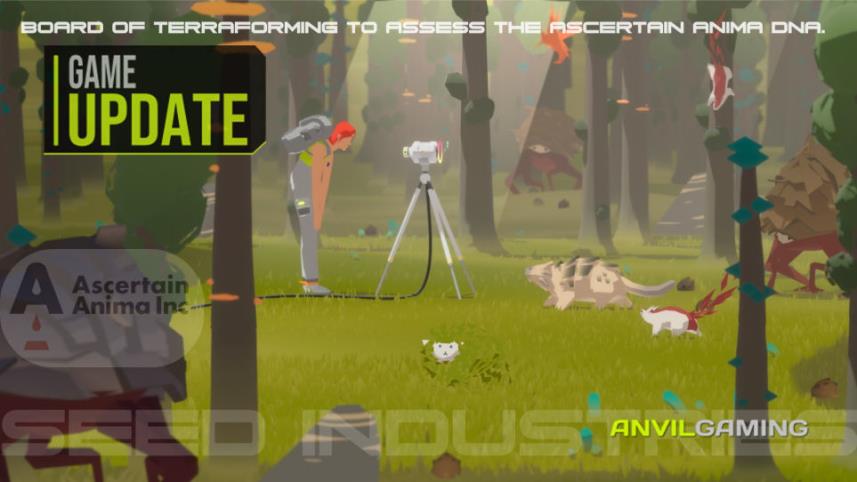
SEED's Dezima Donations event is coming to an end, but the story surrounding it may be far from finished. Spark posts have revealed an Axiom attack, a laboratory breach and DNA reaching Avesta's surface. Now, with a suspicious image showing animals and an unexpected reward teased, we investigate whether Klang has been quietly preparing the planet for new life.
Read More
Klang named its own broken system in public and came back three days later having fixed it four separate ways. The fix list is long enough to finally itemise what trade was costing people. The drone rebalance is the bill, and it charges only those who tidy up.
Read More
Klang says SEED market failures have fallen from roughly 20% to 4%, but that is not an all-clear. Buyers need free inbox space and scheduled haulers, while responsibility for a lost shipment can change at the Spaceport. Here is who carries the risk now.
Read More
Mundi hosted the Covital Show on SEED's official channel and put the roadmap on screen. 0.4 is City Life - law and order, electricity, organisations, building subdivision, bars. And the board says we are nowhere near the end of it.
Read More
SEED 0.3.3 caps a single Cultivator's votes at 15% of the society population, puts a price on firing a Seedling, and spends the rest of a very long changelog teaching the game to explain its own failures.
Read More
SEED 0.3.2 wraps a summer event around depleting ore, a single-item hierarchy, stronger governance, and a safer market. Our analysis of Klang's official notes and what each change will cost your society.
Read More
Your Seedling isn't lazy - it's following orders. Every event in SEED's Scheduler has its own priority list, and anything past the top few is wallpaper. How events work, why needs deserve their own hour, when a direct order beats the schedule, and a week you can copy.
Read More
A SEED hospital can have a skilled doctor, medicine on hand, and opening hours, yet still collect one-star 'wasted visit' reviews. This guide turns seven weeks of community troubleshooting into one current setup for services, staffing, stock access, and patient schedules.
Read More
Every crafting task in SEED shows three times, and most players read the wrong one. Total Time only says when the output appears - Work Time is what the job actually costs your settlement. Read them that way and the obvious recipe is often the expensive one.
Read More
Health in SEED is not a bar you refill. It is a system of specific conditions, severity tiers and sixteen medical specialisms — and the serious end of it depends on other people.
Read More
What a Seedling does while you are away in SEED — what keeps running, what it decides for itself, what degrades and how fast, and how to end a session so you come back to a life rather than a mess.
Read More
SEED puts you in charge of people who make their own decisions, on a planet that keeps running whether or not you are logged in. One real hour is one day on Avesta. Here is what that actually means to play, what Early Access still gets wrong, and who should not buy it.
Read More
Wyrmhold does not run open recruitment. We take people for a need, after a conversation. This is what the Hold expects of a resident, what it provides in return, who it is honestly not for, and where to come and talk to us.
Read More
Wyrmhold is our society on Avesta. Its founding stories are not decoration - each one encodes a SEED system that will decide whether your own society survives. Here are three of them, and what they are really about.
Read More
The first record of what Wyrmhold actually did. One month, almost no visible expansion, and a great deal of infrastructure - the survey, the Kernel, the Dragonforge Ward workshops, the Elderwyrm department, an election, and the Hold's first registered business.
Read More