
GAMING
Loading





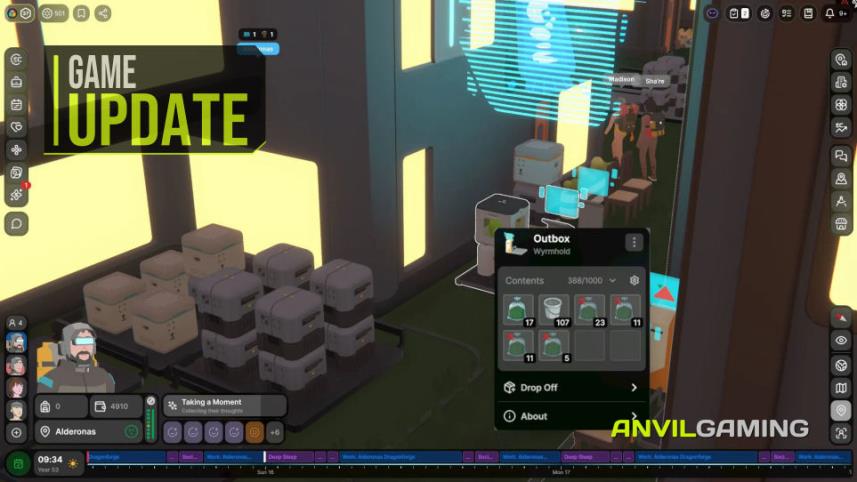
SEED's market is getting substantially safer, but it has not earned blind trust. Klang says market failures have fallen from around 20% to around 4%, with the biggest improvements affecting the faults that lost items or money and left orders blocked.
That is the good news. The catch is that Klang still describes real problems, says Auto-Restock remains unreliable and has more fixes coming in 0.3.5. A failed order can also be a perfectly functional market colliding with a full inbox, no Seedling scheduled to make the delivery, or a carrier who falls unconscious while transporting your purchase. Avesta has managed to make checkout a staffing decision.
This analysis is based on Klang's market update published on 11 September 2026, the studio's earlier market report, the current patch notes and shipped game data. The percentages are Klang's measurements, not AnvilGaming test results.
Klang's new market reliability update puts the previous failure rate at around 20% and the current figure at around 4%. Taken at face value, that is a reduction of roughly four-fifths.
More important than the headline number is where the improvement happened. Klang says the largest gains are in failures that could lose items or money, or leave an order blocked. Those were the faults that made trade dangerous rather than merely irritating.
The number still needs context. Klang does not define the measurement window, whether the percentage counts orders or delivery attempts, which markets are included or whether legitimate simulation failures sit in the same figure as software faults. That does not erase the improvement. It does mean nobody outside Klang can reproduce the calculation or treat 4% as a warranty.
In our own market use, we have not encountered a failure since 0.3.1. That is genuinely encouraging. Because we have not documented the number and type of orders behind that experience, however, it remains a direct observation rather than a competing failure rate.
Klang does not call the job finished either. Auto-Restock is still named as an example of something that does not work correctly, and the studio says a large set of further market fixes is coming with 0.3.5. No release date or complete fix list is provided in this update.
The most useful part of Klang's new explanation is that many current failed deliveries are being caused by the simulation around the market.
A buyer needs room in the destination inbox or storage. A self-pickup needs an available Seedling scheduled to Haul. A logistics company needs employees assigned to Client Deliveries. The delivery can still be interrupted after collection if the carrying Seedling keeps the item, falls unconscious, or dies and drops it somewhere.
The shipped delivery activity supports that explanation. Before a haul can proceed, the game checks that the assignment permits delivery and that the destination has capacity. The work itself is not an abstract transfer: a Seedling walks to the source, picks the resource up, carries it to the destination, and puts it down.
That distinction matters. A market order can match correctly and still fail because the physical work needed to finish it never happens. Fixing the market code will not create storage space or put a logistics employee on shift.
It is also a difficult line to draw fairly when the game does not explain the failure. Klang acknowledges that problem and says the interface and notifications need to tell players what happened and what they can do about it. Until those messages are reliable, a legitimate simulation outcome and a bug can look exactly alike from the wrong side of a missing shipment.
Klang has now explained how responsibility is assigned when an item is genuinely lost through the simulation rather than through a bug.
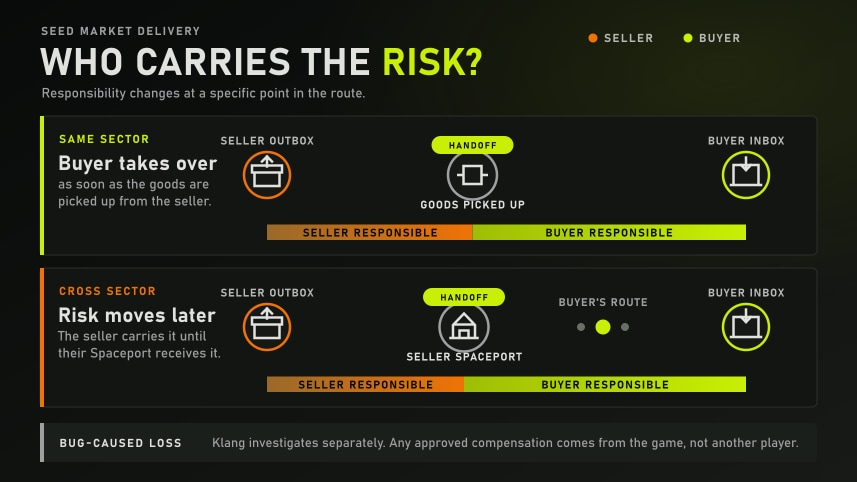
The principle is sensible: responsibility follows the part of the route a player controls. It also explains a refund change. Under the older behaviour, a buyer who lost an item during delivery could be refunded from the seller's account even after the seller had completed their part. That punished the wrong player and left a route for exploitation.
There is another complication. An interrupted hauler may still have the item or may have dropped it in the world. Automatically creating compensation before establishing what happened risks duplicating the goods. A missing delivery is therefore not automatically a destroyed delivery.
If an order goes wrong, trace the carrier and the route before assuming the stock has vanished. It may be sitting in a Seedling's inventory while everyone involved is having a substantially worse day than the order screen suggests.
One practical difference can now be confirmed: a Delivery Inbox placed before 0.3.4 can retain its old request settings, while one added after the update begins with nothing selected.
The 11 September update warns that an inbox accepting every kind of item can be filled by ordinary hauling. Klang's 0.3.4 patch notes, published four days earlier, say a newly placed Delivery Inbox starts by requesting nothing instead of everything. The shipped container definition agrees with the 0.3.4 notes. Those descriptions appear contradictory until the age of the container is taken into account.
We have now seen both behaviours in Wyrmhold. The existing Delivery Inbox serving our rental properties still has every resource selected. The Inbox in a residence built for our Seedlings after 0.3.4 defaulted to nothing selected. That live comparison supports the old-versus-new explanation.
Our 0.3.4 analysis reported the new default described in those patch notes. The practical rule is to inspect the actual Inbox. An older one may fill with unrelated stock; a newer one may reject everything until its request list is configured. Before placing a market order, confirm that the destination has free capacity and requests the item you are buying.
The wider direction is clearer too. Market failures are down, our own use has been clean since 0.3.1, and Klang has continued working on the problem behind the scenes, even though every intervention has not been formally announced.











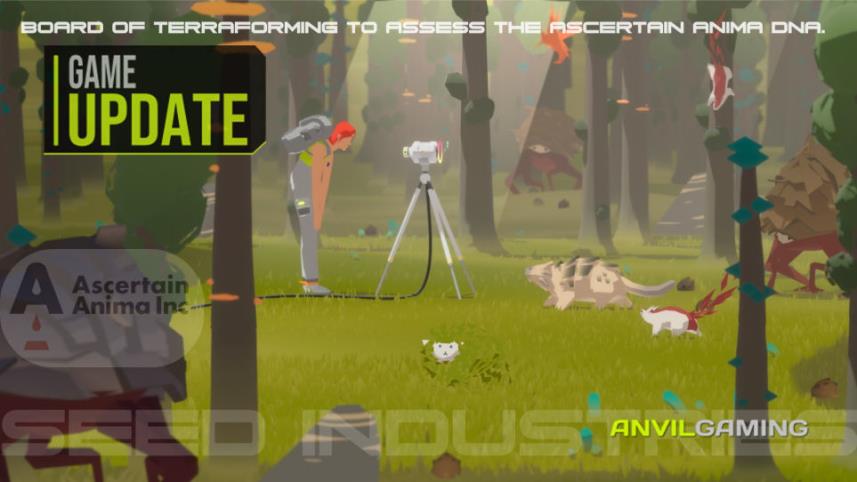
SEED's Dezima Donations event is coming to an end, but the story surrounding it may be far from finished. Spark posts have revealed an Axiom attack, a laboratory breach and DNA reaching Avesta's surface. Now, with a suspicious image showing animals and an unexpected reward teased, we investigate whether Klang has been quietly preparing the planet for new life.
Read More
Klang named its own broken system in public and came back three days later having fixed it four separate ways. The fix list is long enough to finally itemise what trade was costing people. The drone rebalance is the bill, and it charges only those who tidy up.
Read More
SEED 0.3.4 takes rare ore out of repairs, teaches schedules to explain their failures and stops trees growing back. It also rebalances storage - and because the new capacities only apply to containers you move, tidying up is now the most expensive thing you can do.
Read More
Mundi hosted the Covital Show on SEED's official channel and put the roadmap on screen. 0.4 is City Life - law and order, electricity, organisations, building subdivision, bars. And the board says we are nowhere near the end of it.
Read More
SEED 0.3.3 caps a single Cultivator's votes at 15% of the society population, puts a price on firing a Seedling, and spends the rest of a very long changelog teaching the game to explain its own failures.
Read More
SEED 0.3.2 wraps a summer event around depleting ore, a single-item hierarchy, stronger governance, and a safer market. Our analysis of Klang's official notes and what each change will cost your society.
Read More
Your Seedling isn't lazy - it's following orders. Every event in SEED's Scheduler has its own priority list, and anything past the top few is wallpaper. How events work, why needs deserve their own hour, when a direct order beats the schedule, and a week you can copy.
Read More
A SEED hospital can have a skilled doctor, medicine on hand, and opening hours, yet still collect one-star 'wasted visit' reviews. This guide turns seven weeks of community troubleshooting into one current setup for services, staffing, stock access, and patient schedules.
Read More
Every crafting task in SEED shows three times, and most players read the wrong one. Total Time only says when the output appears - Work Time is what the job actually costs your settlement. Read them that way and the obvious recipe is often the expensive one.
Read More
Health in SEED is not a bar you refill. It is a system of specific conditions, severity tiers and sixteen medical specialisms — and the serious end of it depends on other people.
Read More
What a Seedling does while you are away in SEED — what keeps running, what it decides for itself, what degrades and how fast, and how to end a session so you come back to a life rather than a mess.
Read More
SEED puts you in charge of people who make their own decisions, on a planet that keeps running whether or not you are logged in. One real hour is one day on Avesta. Here is what that actually means to play, what Early Access still gets wrong, and who should not buy it.
Read More
Wyrmhold does not run open recruitment. We take people for a need, after a conversation. This is what the Hold expects of a resident, what it provides in return, who it is honestly not for, and where to come and talk to us.
Read More
Wyrmhold is our society on Avesta. Its founding stories are not decoration - each one encodes a SEED system that will decide whether your own society survives. Here are three of them, and what they are really about.
Read More
The first record of what Wyrmhold actually did. One month, almost no visible expansion, and a great deal of infrastructure - the survey, the Kernel, the Dragonforge Ward workshops, the Elderwyrm department, an election, and the Hold's first registered business.
Read More